Tuesday, March 25, 2014

What happens in Dagestan stays in Dagestan

US Deputy National Security Advisor Ben Rhodes --

MR. RHODES: Well, if you look at the Syria chemical weapons issue, that's actually moving in very good pace, and we're about at the 50-percent milestone in terms of Syrian chemical weapons being removed from the country, taken into the custody of the international community. So on the chemical weapons issue we've seen continued cooperation. Russia has invested a lot in that project. Frankly, they have nothing to gain from seeing that project go off the rails, in large part because there are extremists in Syria that Russia doesn’t want to have -- gain access to chemical weapons who might pose a risk to them.  

Under Russia's theory of the August 2013 chemical weapons attack, the Syrian rebels already have access to chemical weapons, since the Russian theory is that the rebels did it.

If the White House knows of an undisclosed internal Russian view that Bashar al-Assad did it, now would be a good time to say so.
Friday, March 21, 2014

Sometimes a trade deal is just a trade deal

Barack Obama, 10 November 2011 --

Russia’s World Trade Organization (WTO) accession would be yet another important step forward in our reset of relations with Russia, which has been based upon the belief that the United States and Russia share many common interests, even as we disagree on some issues. Whether cooperating to supply our forces in Afghanistan, securing nuclear materials, or achieving the New START Treaty, the United States and Russia have demonstrated the ability to produce “win-win” outcomes on security issues. Russia’s dramatic step today towards joining the WTO underscores our ability to cooperate also on economic issues of mutual interest.

[previous item in this series]

Wednesday, March 19, 2014

Dialectical Materialism and Gulags

New York Times Peter Baker, managing to write an extended article on the new Cold War with Russia without mentioning the Obama-Romney exchange on this possibility in 2012 --

Specialists said this would not be another Cold War, which was a global contest of ideology, pitting capitalism versus communism. Mr. Putin positions himself as leader of anti-American sentiment, but it is rooted in Russian nationalism rather than Marxist philosophy, and his main focus is on his own neighborhood.

The USSR was based on Marxist philosophy?


For you, special price

From the continuing trial in Dublin over Anglo Irish Bank's complicated deals regarding its own shares, the current issue being the astonishing indifference of the head of financial regulation, Patrick Neary, to the Bank's predicament [Irish Times] --

Mr Neary also told the court he could not recall making a phone call in early March [2008] to then chief executive of Anglo David Drumm to discuss how a road show in the Middle East to sell the CFDs had gone. Mr Gageby said the roadshow occurred in the first week in March and Matt Moran, then chief financial officer at Anglo, had given evidence of the call. Mr Neary said he had no recollection of it and was not aware the roadshow had happened. He believed the roadshows took place at the end of March and in April, he said.

The problem was that Anglo had failed to offload the dodgy derivatives (the CFDs) to Gulf investors. Which is revealing. In 2008, Qataris bought into Kaupthing (busted Icelandic bank), Barclays (nearly went bust UK bank) and Credit Suisse (nearly went bust Swiss bank). In addition, Abu Dhabi bought into Citigroup, which turned out to be such a horrible deal they ended up suing them.

But even with all that money sloshing around, the sheikhs smelt a rat with Anglo. It's almost as clear a signal as celebrating when you've outbid the sheikhs on trophy property in London.

Tuesday, March 18, 2014

Rage Against the Machine

Since everyone else is putting forward their MH370 theories, here is another. Whoever diverted the flight was angry about the way the role of the pilot had been supplanted by cockpit computers. So it was a nice twist from that perspective to have the computer execute the first turn off course and then continue to outwit the plane systems from there.

Monday, March 17, 2014

Bashar was not on the list

It was one of those irresistible stories: Saudi Arabia bans 50 names! Obscure in origin, "viral" on social media, and made true by repetition. Here it is arriving at the Washington Post Worldviews blog. However as of Sunday, it's looking flimsy. The Civil Status Department of the Saudi Ministry of Interior has said it never issued any such list. Instead it says that it has a set of long-standing rules that baby names can't be titles, religiously aggrandizing, compound names, non-Arabic names, or names that are just plain silly ("puppy"). Hospitals appear to have been working off a list in terms of advising parents on names, and that found its way to the media, and the rest is standard made-you-look online media at work.

Incidentally, lots of people died in Syria this weekend, but their names were probably not on any banned list in Damascus. Move along folks, nothing to see here.

Friday, March 14, 2014

Don't ask me about my business

The scene: it's January 2008. The chief Irish financial regulator Patrick Neary has been hearing oul' chat (as they say in rural Ireland) that flamboyant businessman Sean Quinn has amassed a large equity stake in the country's most aggressive bank, Anglo Irish, via unregulated and highly risky derivatives. Sean Quinn just happens to pop into the regulator's office, and ...

Mr Neary said he did not ask him directly as Mr Quinn was entitled, as a private citizen, to have any investments he wished. He said he did not think it would be appropriate to tackle a person about their own investment portfolio.

2 months later, Bear Stearns had to be rescued and banking share prices around the world crashed, including in Ireland. Quinn was effectively ruined at that point, and had at the very least compounded the bank's problems, although it would be another 6 months before that was in the open.

But at the start of the year, when there might still have been a chance to pull the game out of the fire, it was a gentlemen don't talk about stocks situation.

Where did they get that idea?

European Central Bank President Mario Draghi receiving the Joseph "Creative Destruction" Schumpeter Award (it's just as well Paul Krugman is travelling) --

Looking back, there is no doubt that the business models and liability structure of euro area banks had to evolve. Before the crisis, numerous banks funded their activities with too much debt and not enough equity; and that debt involved wholesale financing that was too high relative to deposits. This model was only able to develop because of the perception of an implicit state guarantee for bank debt – a perception that is perhaps the most pervasive component of the link between sovereign and bank risks.

Could those naughty banks have developed the "perception" of a state guarantee for bank debt because, er, the ECB was actually enforcing such a guarantee such as in the case of Ireland, November 2010?

Don't ever take sides against the family, ever

The European Union imposed personal sanctions against the Assad regime in Syria, which is probably as close as we'll ever get to accountability for the Assad killing machine.

Somehow, Bushra al-Assad, Bashar's sister and widow of Assef Shawkat, got around to appealing against the sanctions as regards her. If you're not keeping score, Assef Shawkat was himself a senior figure in the regime and was killed in a 2012 bomb attack by the rebels. Anyway, among her rejected grounds for appeal were --

The General Court rejects Ms al-Assad’s arguments that, as a non-working mother, she does not perform any public or economic function, and that her children are now at school in the United Arab Emirates. The General Court finds that the fact that Ms al-Assad’s children are at school in the United Arab Emirates is not sufficient for her to be regarded as having dissociated herself from the Syrian regime and as having been forced to flee the country. There may be many other reasons for a change in Ms al-Assad’s residence, such as the deterioration of the security situation in Syria.

It's just as well the court ruled this way, because by her logic, any connected figure to any sanctioned regime would have a roadmap to exempt themselves from sanctions.

Since sanctions look to be about all that Europe has in its quiver against Russia, this stuff is important.

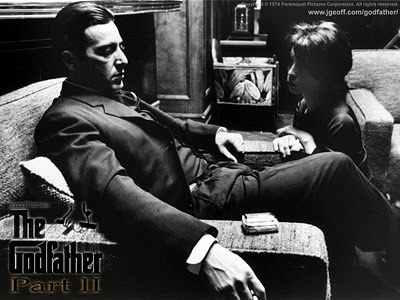
Photo: Michael and Connie Corleone/


Thursday, March 13, 2014

You'll never crush the Irish

The Wall Street Journal explains the complicated wherever-I-lay-my-filing-documents-that's-my-home arrangements of the Candy Crush maker --

Its registration in late 2013 in Dublin could give it the ability to adhere to certain "home country" corporate governance practices in lieu of certain NYSE listing requirements, King said in a February filing with the U.S. Securities and Exchange Commission disclosing its intention to list shares. For example, under Irish law, there is no requirement for equity compensation plans to be approved by shareholder resolution, and the company won't be subject to U.S. proxy rules, it said. King denied its recent Irish affiliation would reduce its tax burden. "King is a global company and complies with all applicable tax regulations in each country where we operate," a company spokeswoman said. "Like any other company, we pay corporate tax and being an Irish company doesn't affect our tax rate."

Monday, March 10, 2014

Lost at 35000 feet

There are various analogies being drawn between Malaysia Airlines Flight MH370 and Air France Flight  AF447, both mysterious over-the-water cruising altitude crashes of modern aircraft with experienced airlines.

There's one outcome of the AF 447 investigation that perhaps needs more highlighting: despite our sense of the capabilities of modern technology, the degree of uncertainty that surrounds the location of these aircraft, especially when they are transitioning through multiple air traffic controls and radios aren't working that well, as often seems to be case.

For a vivid illustration of how the system still works on guesses about where an aircraft should be and misunderstandings about which flights are being talked about, read the Search and Rescue (SAR) appendix to the French inquiry into AF447. Not only did air traffic controllers across 2000 miles have no idea where the flight was, they weren't sure who to tell to look for it.

Friday, March 07, 2014

He's taking it up a notch

Kremlin version of Thursday's Obama-Putin phone call --

Vladimir Putin, in particular, noted that which came as a result of anti-constitutional coup that does not have a national mandate, the current Ukrainian leadership imposes the Eastern and Southeastern regions and Crimea is illegitimate decision.

It's a Google translate from the Russian which for now is the only version available. But the intended meaning is clear. Putin didn't just talk about Crimea having an illegitimate government. He talked about all of eastern and southern Ukraine as such.

The White House staff better not make any big weekend plans.

Thursday, March 06, 2014

Ah go on, tell us who it was

European Commission President Jose Manuel Barroso at University College Cork today --

In this regard, I would like to make one thing clear: the European Commission has always been on the side of Ireland, one could even say, one of your best friends. During the European Union/IMF programme, I personally made the case to other European leaders for lower interest rates and longer maturities on Ireland's loans. I can tell you that sometimes, at least one of the phone calls took about one hour. It was also about Portugal, but I would have done it also just for Ireland.

Wednesday, March 05, 2014

Musical Interlude


The aptly titled The Age of the Understatement from The Last Shadow Puppets, featuring Crimean Self Defence Forces.

You can't teach an old bear new tricks

People seem surprised that Russia would brazenly deny that those Russian soldiers in Crimea are Russian soldiers. Cast your mind back to last August and the Bashar al-Assad machine chemical weapons attack in Damascus and these remarks soon after (31 August) from Vladimir Putin --

VLADIMIR PUTIN: We have been discussing this issue with our American partners. You know our position. As regards the possible use of weapons of mass destruction – any weapons of mass destruction, including chemical weapons – our position is consistent. We are categorically opposed to them, we condemn them and, accordingly, if their use can be proven, we will participate in developing countermeasures. With regards to this case specifically: as you know, the Syrian government already asked the international community to conduct inspections, as they believed that rebels had used chemical weapons. But unfortunately nothing happened. A reaction occurred only after [August] 21, when these weapons were used once again. What do I think? Common sense speaks for itself. Syrian government troops are on the offensive. In some regions they have encircled the rebels. Under these conditions, the idea of giving a trump card to those who are constantly calling for foreign military intervention is utter nonsense. It is not logical in the least; especially when it [the attack] coincides with the day UN inspectors arrived. Therefore I am convinced that [the chemical attack] is nothing more than a provocation by those who want to drag other countries into the Syrian conflict, and who want the support of powerful members of the international community, especially the United States. I have no doubt about this. As for the position of our American colleagues and friends who claim that government forces have used weapons of mass destruction, in this case chemical weapons, and that they have evidence thereof: let them present it to UN inspectors and the Security Council. Claims that proof exists, but that it is classified and cannot be shown to anyone are beneath criticism. It’s simply a lack of respect for their partners and participants in international activities. If there is evidence, they must produce it. If they don’t, then there is none. Allusions to the fact that there are certain communications intercepts do not prove anything, and cannot act as the foundation for making a fundamental decision like whether or not to use force against a sovereign state.

Russia later rejected the UN inspector's report which put on the table a trail of evidence leading directly to the Assads.

Pitiful little band

Barack Obama in an interview with Jeffrey Goldberg --

When you have a professional army [Bashar al-Assad] that is well-armed and sponsored by two large states who have huge stakes in this, and they are fighting against a farmer, a carpenter, an engineer who started out as protesters and suddenly now see themselves in the midst of a civil conflict -- the notion that we could have, in a clean way that didn’t commit U.S. military forces, changed the equation on the ground there was never true.

If his view of the Syrian conflict is that it's an army backed by Russia and Iran against protesters who took up arms after being attacked, but also that the US can't intervene, then he has indicted his own policy. For in that case, the 130,000 dead arise from the ability of the farmer, the carpenter, the engineer, to draw out what should be a totally uneven contest into 3 years of futility for everyone.

In other words, the US should have supported Bashar al-Assad in 2011, and at least brought things to a quick end!

Slightly more seriously, if that's his view of the Syrian conflict, is he surprised that Islamist groups don't have a hard time selling the battle against the Assad killing machine as a righteous cause?

Tuesday, March 04, 2014

This one goes up to 11

From the Vladimir Putin press conference today --

The ordinary Ukrainian citizen, the ordinary guy suffered during the rule of Nicholas II, during the reign of Kuchma, and Yushchenko, and Yanukovych. Nothing or almost nothing has changed for the better. Corruption has reached dimensions that are unheard of here in Russia.

Plus ça change


Page 64 From The Invasion of the Crimea: Its Origin, and an Account of Its Progress Down to the Death of Lord Raglan, Volume 1, by Alexander William Kinglake published in 1877, via Google ebook.

Sunday, March 02, 2014

First we take Moldova

The cool bloggers haven't noticed yet, but there's a region in Europe called Trans-Dniester sandwiched between Ukraine and the EU-friendly state of Moldova, which due to Russian agitation has refused to be under the control of Moldova even though by the way the post-war borders were drawn, that's where it should be.

So let's review. On one side, we have Russia, which in true Bismarck style eventually finds an excuse to occupy every scattered territory that has some Russian speakers in it. On the other, we have such an enclave, but adjacent to a country now being carved up by Russia to the east (Ukraine), but properly part of a country -- Moldova -- that has played by all the rules, to the west. And which in turn is historically linked to Romania, which is in the EU and NATO.

What's the reason why we don't wake up in the morning to find NATO troops in Trans-Dniester to prevent its forcible and illegal incorporation into Russian control?

How to be a cool blogger

Josh Marshall, 20 February --

Russia poses little if any geopolitical risk to the United States or its vital interests. It is at best an irritant on the margins.

Josh Marshall, 1 March --

Lets say that Russia proceeds and formally annexes Crimea and perhaps goes ahead and slices off the most Russified eastern portions of Ukraine. Setting aside relations with the US, that will undoubtedly spawn a new and darker era in relations with the rest of Europe and a post-partition Ukraine that is hyper-European in its posture both because of renewed Russian aggression and a transformed composition of Ukrainian and Russian percentages of the population ... The crux of current crisis, or the central issues at stake, is not which slabs of land, in the abstract, should be part of Ukraine or Russia but that borders shouldn't be changed by force or the threat of force.

You'll  be staring for a long time before you'll see how an "irritant on the margins" has spawned a "new and darker era in relations with the rest of Europe" or put into play the question of changing borders by force. But that's the privilege of being a VSB (Very Serious Blogger).

In the humility files, this blog made fun of Mitt Romney during the last campaign season for talking about the possibility of a new US rivalry with Russia. As the Glenn Reynolds meme has it, they told them that if they voted for Mitt Romney, we'd be dragged back into a futile Cold War with Russia, and they were right!

UPDATE: Bonus serious tweeting from Josh Marshall --

Countries that fear encirclement while also being very powerful are usually very dangerous.

Who was it complaining two weeks ago about trite historical frames for analyzing contemporary US-Russia relations?

Saturday, March 01, 2014

Abaya, Shmabaya

Statement from Saudi Press Agency --

An official source at the Ministry of Foreign Affairs expressed strangeness and astonishment at the remarks made by the Press and Information Section, at the Russian Ministry of Foreign Affairs, issued on Tuesday Feb. 25, 2014, in which it inserted the name of the Kingdom of Saudi Arabia, in an attempt to manipulate facts and blame the Kingdom for taking the side of the Syrian people, against the heinous aggression it faces by the Syrian oppressing regime, which did not restrain of using ultimate military harness made for wars, such as tanks, canons and warplanes, or even the use of internationally prohibited and criminalized chemical weapons, in a flagrant violation of all humanitarian and international norms and charters. In the light of the compelling and conspicuous facts, what is raising strangeness and astonishment is the continuation of Russia's support for the criminal regime, despite the regime's attempts to foil the political solution made by Geneva 2, to deviate it of its path and its objectives aiming at forming a transitional body to put an end to the Syrian crisis, the source added. This ongoing support was and still is a main reason to encourage Damascus regime to lead, adamantly, with its deviation and tyranny, and thus keeping the Syrian crisis enkindled for the third year in a row without even a glimpse of hope to solve it or to end one of the biggest crises and human sufferings recorded in the contemporary history, he stated. Due to the disappointment against the international failure to solve the crisis, the support of Russia for the Syrian regime is raising a lot of questions and no doubt Russia has lost a great portion of other Arab peoples' sympathy, who feel the grudge of betrayal, he concluded.

Syria was the canary in the coalmine -- or rather the 130,00 canaries in the coalmine -- for Ukraine.

Incidentally, when did Russia go to the UN Security Council for approval of their cross-border intervention, just as they force everyone else through that route on Syria?

No wonder the Saudis resigned their non-veto UNSC seat.

One less commission

Above is the cover sketch that appears on the 2013 report of the USA-Russia bilateral presidential commission, which outlines all the boffo cooperation between the two countries in the year and a bit up to that point. There's a seemingly impressively list of sectors covered leaving the impression that it would be difficult for the USA to have a better friend than Russia -- take that, Canada! -- yet there are strangely absent items under such topics as "Syria," "chemical weapons," or "invading neighbouring countries."

But seriously, if the best the White House can threaten as consequences for the Russian occupation of Crimea, a part of Ukraine, is not showing up to a G8 summit in June, couldn't they at least threaten to kill this useless commission as well?

Wednesday, February 26, 2014

Sarah Palin was right (about Putin)

Josh Marshall recently told everyone to calm down about Russia --

No, Sorry, There's Not Ever Going to Be Another Cold War with Russia ... Russia poses little if any geopolitical risk to the United States or its vital interests. It is at best an irritant on the margins. Nowhere is this better illustrated than by the fact that almost the entirety of Russia's foreign policy is tied up with trying to solidify dominant relationships with the countries ringing its borders, almost all of which were part of the Soviet Union, their so-called 'near abroad'.

Reuters --

President Vladimir Putin's order on Wednesday for soldiers to be ready for war games near Ukraine was the Kremlin's boldest gesture yet after days of sabre rattling since its ally Yanukovich was ousted at the weekend. Moscow denied that the previously unannounced drill in its western military district was linked to events in its neighbor but it came amid a series of increasingly strident statements about the fate of Russian citizens and interests.

It's very strange to downgrade the potential problems of a Russia obsessed with its near abroad, since the power games around that explain a lot of 19th century history and thus the lead-in to two world wars. And as Ms Palin pointed out, one of those borders is with Alaska!

Tuesday, February 25, 2014

The Russian bailout allergy

A Wall Street Journal article explains the complicated politics of a western financial bailout for Ukraine --

Without Russian involvement, the politics of a bailout organized by Europe and the U.S. would become more complicated, since a big chunk of the bailout money would go toward paying Ukraine's gas bills to Russia.

That's indeed true, but just about every bailout in recent years has involved loaning countries money to repay to people outside the country -- bankers, bondholders, or indeed back to the countries delivering the bailout money. The same aversion to bailout money heading to Russia was previously seen for Cyprus. But what these reservations highlight is that bailouts are rarely foreign wise men providing cash in exchange for a package of reforms. It's foreign wise men making sure that their own loans get paid back.

Sunday, February 23, 2014

Sometimes a trade deal is just a trade deal

In the discussion over the current crisis in Ukraine, there are a number of references to an article by Timothy Snyder in the New York Review of Books. The article indeed provides a nice discussion of the complex character of the protests as well as the (former) government's strategy for portraying them. But things get a bit odder when Snyder presents what he sees as a real agenda of Russia in the broader game in the region:

The course of the protest has very much been influenced by the presence of a rival project, based in Moscow, called the Eurasian Union. This is an international commercial and political union that does not yet exist but that is to come into being in January 2015. The Eurasian Union, unlike the European Union, is not based on the principles of the equality and democracy of member states, the rule of law, or human rights. On the contrary, it is a hierarchical organization, which by its nature seems unlikely to admit any members that are democracies with the rule of law and human rights. Any democracy within the Eurasian Union would pose a threat to Putin’s rule in Russia. Putin wants Ukraine in his Eurasian Union, which means that Ukraine must be authoritarian, which means that the Maidan must be crushed ... The Eurasian ideology draws an entirely different lesson from the twentieth century. Founded around 2001 by the Russian political scientist Aleksandr Dugin, it proposes the realization of National Bolshevism. Rather than rejecting totalitarian ideologies, Eurasianism calls upon politicians of the twenty-first century to draw what is useful from both fascism and Stalinism.

If true, this combination of fascism and Stalinism has chosen the ultimate Trojan horse for its conquest: a customs union. Or put another way, if you want a vision of a Eurasian future, imagine a customs man stomping "cleared" on a crate of Chinese goods at the Kazakh border -- forever. Because right now, that's all the Eurasian Union is: a 3 country customs union that has some cool geographic features (goods can move freely from the Chinese border to the EU border by rail). And even the people directly involved in it have a fairly cautious view of its scope:

The Customs Union’s website, for example, openly explains that it drafted its rules for economic integration with an eye on the practices of the European Union, and officials cite Nafta and other groupings as models. Using this approach, the Customs Union has achieved modest success increasing trade between member states since its inception, a study by the Brussels-based Center for European Policy Studies found. “Everybody is looking for at least regional regulation of these large markets,” Ms. Valovaya said. “We in Eurasia are doing it, South Americans are doing it, and the United States is doing it.”

Alien and Predator uniting against the rest of us, it ain't.

Friday, February 21, 2014

Arab Spring becomes European Winter

There's justifiable astonishment that the Ukrainian government security forces were apparently using snipers against protesters yesterday.

That's fine, but what do people think that was going on in Syria 3 years ago was less outrageous?

Thursday, February 20, 2014

Never say never again

It's going to be an interesting year for the typical event where VIPs assemble to commemorate some past tragedy and proclaim that we are all so much wiser now and wouldn't let it happen again. 130,000+ dead in Syria. The decades-long human rights disaster in  North Korea. Crises in the Sahel that are too low profile to merit the front pages. Anyway, here's European Commission President Jose Manuel Barroso from a few years ago commemorating the Prague Spring:

I understand that your memories from 1938 and 1968 years, when you were first betrayed and then abandoned, might lead you to distrust the effects of major continental events. But I hope you share my view that the European geopolitical landscape has changed considerably. Today, European history is not made by occupying superpowers and totalitarian political regimes. It is made by democratic countries that are free and equal. We should never lose sight that the project of European integration was a reaction against a continent suffering from wars and military occupations. Keeping peace and stability is also a central goal of a democratic Europe.

You could find the same language for Hungary 1956.

And then you'd read the news from Ukraine

The Celtic Oblast

One thing the European Union might want to consider on their Ukraine sanctions list is that Vladimir Putin used an Irish Stock Exchange listed Eurobond to provide US$2 billion in financing to Ukraine on Monday -- one day before the government in Kiev decided to crack down on the protests. Sure, the timing may be a coincidence and closing off this particular bond may be a mere inconvenience, but sanctions are all about inconvenience.

Wednesday, February 19, 2014

It reset to the cold war

It's odd that the initial handicapping on Hillary Clinton's presidential chances in 2016 is focused on possible baggage from Bill and not from the biggest miscalculation of her own time as US Secretary of State, namely the supposed reset of relations with Russia in 2009.

5 years later, with Ukraine in turmoil, Aleppo being barrel-bombed to oblivion, and the Kremlin no doubt working on reasons to say that there's nothing that can be done in Venezuela or North Korea, there's not much in the way of benefits from the policy.

Tuesday, February 18, 2014

Up the Republic

Scottish First Minister and independence champion Alex Salmond is grappling with an inverse Groucho Marx problem: he does want to be in clubs that wouldn't have him as a member. As part of his pushback yesterday against one of those clubs -- sterling -- he said the following:

For example on Thursday George Osborne peppered his speech with references to Scotland as a “foreign country”. Let me be clear. For Scots whether independent or not, the rest of the UK will never be “foreign”. Indeed the Government of Ireland Act of 1948, negotiated after infinitely more difficult circumstances than we have, specifically states that Ireland is not to be regarded as a “foreign country”.

There's just one problem.

There is no such legislation as the Government of Ireland Act 1948.

The last such titled act was 1920, and it never took effect in the 26 counties. There is an Ireland Act 1949, which has content similar to what Salmond describes,  but its context is hardly supportive of his point. From 1922, the Irish Free State had been whittling away at its UK dominion status, which required it to defer to London in matters of foreign affairs and defence along with acceptance of the British monarch as head of state and an associated status of Irish citizens as British subjects. Very little of this was left in practice by 1948 when -- in a decision attributed perhaps apocryphally to excessive consumption of alcohol at a state dinner in Canada -- the country formally declared itself a Republic.

With the fig leaf of Irish Dominion status now gone, the British government passed the above-referenced act to preserve the status of Irish people as non-foreign in the same way as other dominions (e.g. Australia), albeit no longer British subjects. The act also copperfastened Partition by making any change in status of Northern Ireland conditional on majority will in that entity, which was the de facto status anyway.

Thus Salmond's analogy is meaningless. Under the SNP proposal, the British monarch will remain the head of state. Thus there is no need to specify that citizens of a  new republic can retain their ties to Britain, as was the case for Ireland. And far from being negotiated, the 1949 act unilaterally imposed constraints on Ireland's political future, which is one of the risks of departure from the union structures.

Ireland has various lessons for Scottish independence scenarios, not all of them favourable. But a minimal requirement is that the legislative history be correctly understood.