Saturday, June 18, 2016

Rent seekers

A useful paragraph in the IMF numbers round-up on Brexit, dealing with the claim that Britain outside the EU would be a lightly regulated business paradise --

Where the UK scores relatively poorly is in domestically-controlled regulations, such as the complexity of regulatory procedures and licensing and permits systems that are not required by the EU. For example, analysts often point to the UK’s planning regulations and other restrictions on housing construction as being some of the UK’s most economically harmful restrictions—regulations that are wholly under domestic control. 

The report is too polite to speculate about the overlap between the voting bloc that keeps these restrictions intact and prospective Leave voters. 

Friday, June 17, 2016

Naming another problem

Is it possible to write a long news analysis article about the term "Radical Islam" and not mention the Muslim Brotherhood? In the New York Times, Max Fisher comes very close to achieving that feat, before finally invoking the Brotherhood obliquely towards the end.

And since he doesn't spell out the relationship between the term "Radical Islam" and the Muslim Brotherhood, he misses one big reason that people (including this blogger!) don't like using the term to describe any terrorism motivated by extreme interpretations of Islam.

There are Islamic political movements which are "radical" in their desire for a return to fundamentals (Salafist) or in their belief that observant Muslims can reform the modern state from the bottom up (the Muslim Brotherhood) -- but they are not of themselves terrorists. 

Thursday, June 16, 2016

Naming the problem

It will be interesting to watch the process by which the Orlando Pulse killer is a Lone Wolf while the killer of Jo Cox MP is a loner.

Brexiteers would probably agree

Reuters with yet more on the Mozambique mystery loans --

VTB Chief Executive Andrei Kostin told Reuters in an interview. Mozambique Asset Management (MAM) borrowed $535 million from VTB to build shipyards in Maputo and the northern town of Pemba in expectation of a rapid takeoff in the offshore gas sector.  ...  Kostin said he saw the African continent in general as a "high risk zone" but one where operations should continue. "Investors invested in Greece and look how they got burned - but Mozambique is way better than Greece," he said.

Wednesday, June 15, 2016

That's why he's the President

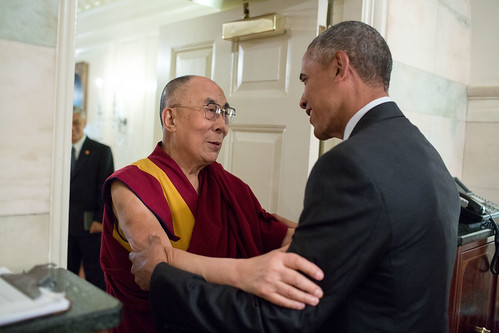
P061516PS-0016

President Obama meeting the Dalai Lama, and issuing a photo thereof. Not going to let anyone else tell him who he can't meet.

Official White House Photo by Pete Souza.

Maputo mystery

Reuters on the Mozambique hidden loan/tuna bond scandal --

The southern African nation's parliament has agreed to open an inquiry, although diplomats doubt it will ask too many tough questions of leaders of the Frelimo party, which has dominated politics since the end of a civil war in 1992. "Frelimo has its own version of accountability, which normally involves car crashes or people disappearing," one regional diplomat said. "The number one priority is to get some of this money back."

Tuesday, June 14, 2016

Magnanville

With Orlando rightly getting so much attention, the ISIS-inspired murder of a couple in a Paris suburb is not so prominent. Yet this case, apparently reflecting a specific ISIS strategy of encouraging loyalists to develop lists of public officials to kill, is no less disturbing.

But just plain astonishing is the legal history of the now deceased assassin Larossi Abballa. He was convicted of being part of a jihadi transit ring to Pakistan in 2013 -- but given just a three-year sentence, with 6 months suspended, whereupon the sentence became time already served on remand. So he was out!

Said the lawyer for one of the other 8 charged with him --

«Ce ne sont pas de dangereux terroristes mais des pieds-nickelés, de jeunes paumés sans repère et incultes, qui se cherchaient une identité dans l'islam radical», avait soutenu Me Georges Sauveur, avocat de Saad Rajraji.

Misfits looking for an identity in radical Islam. Over the subsequent 3 years, Abballa traveled a path to be a depraved murderer. 

Yelling one-at-a-time in a crowded theatre

Writing in the Wall Street Journal, James Glassman is outraged by Iceland's treatment of foreign investors --

Argentina, after the largest sovereign default in history, spent 14 years stiffing creditors until finally settling in March after the defeat of President Cristina Kirchner’s preferred successor. Argentina’s refusal to abide by court orders, negotiate, or even recognize its obligations caused serious harm to the economy as private investors, fearful of receiving the same treatment, stopped lending money. But Argentina has a history of poor governance and serial defaults. You would expect Iceland to be different. Instead, this prosperous member of the European Economic Area and NATO, with an unemployment rate of 2.5% and income per capita of nearly $50,000, is adopting the old Argentine playbook, even hiring the same law firm. The consequences to Iceland’s recovering economy could be similar ...The legislation passed last month gives foreign holders of about $2.3 billion in bonds denominated in Icelandic kronur two unappetizing options. They can either sell their bonds by June 16 at an exchange rate severely below the current market, or hold the bonds until maturity and have the proceeds locked up inside Iceland in a savings account paying 0.5% interest. The exchange rate today is about 122 krona to the dollar, so one million krona should be the equivalent of about $8,100. The legislation orders conversion at between 190 and 210 krona to the dollar, so one million krona becomes as little as $4,800.

There's one thing you'd realize if you read Glassman's column carefully, and a couple of things that you wouldn't, since he doesn't say so.

The one thing you're realize from a careful reading is that these investors bought bonds denominated in the local currency, the kronur. Thus it's Iceland's sovereign decision to set the exchange rate at which these bonds can be converted into dollars -- and the government points out that the exchange rate it has set has to take into account what would happen if all these investors tried to convert into dollars at once when they get paid.

Which brings us to the points not so clear from Glassman but are well explained in this Bloomberg News article. These investors don't want to get out of Iceland. They want to stay invested, because the yields are so large relative to anything else that they get from a well-run country. But Iceland has decided that going up and down with the swell of hedge fund moods is not the way they want to go. So in the second option that Glassman discusses above, they can keep their money in an Icelandic bank account -- until Iceland removes capital controls, which the government wants to do quite soon. And the interest rate in that account is not much different from what they could elsewhere, and in the meantime that Icelandic currency that they're "locked in to" is most likely to gain value -- precisely because of Iceland's unorthodox but successful approach to handling its debt crisis.

The message to foreign investors is not that Iceland is the northern Argentina. The message is not to invest in a country that does such a good job of dealing with the cycles caused by foreign investors that it can pick and choose how to pay them. 
Monday, June 13, 2016

Connected wolves

Matthew Yglesias in Vox --

Lone wolf terrorist attacks are the thorniest problem in national security ... The basic problem is that once a shooting spree shifts into the mental and political category of "terrorism," an expectation develops that there will be a foreign policy response.

Thornier than nuclear proliferation?

But anyway. About that term "Lone wolf."

What's the difference between a Lone Wolf and a Loner? In media perceptions, it seems to be mainly about the shooter. Self-identified Muslims involved in these acts are "lone wolves." So using the term implies that at face value, we think of the lone wolf as acting in response to broader cultural and social forces and not just his own view of the world, which already implies that dealing with lone wolves is going to involve issues that transcend country borders. So it's a bit strange to claim it's bad that people might expect a foreign policy response. Indeed, it's generally strange that policy elites often celebrate globalization in the context of trade, but balk at the idea that it could play an increasing role in previously domestic turmoil.

One could go a step further and adapt Olivier Roy to the Orlando and San Bernardino shootings: we're seeing the Islamization of spree killers. So just as with his theory of European Islamism, a pre-existing extremist social tendency found its type -- drifting second-generation Arab immigrants in France and Belgium, and second-generation Muslim immigrants in the USA -- and that agenda got hitched to terrorism and spree-killing respectively. And again, those forces relate intrinsically to how countries interact in the world.

Tangled market

The owner of the gun shop that sold the weapon used in the Orlando massacre is a former New York City police officer. 

Timely

Saudi Press Agency --

Jeddah, Ramadan 07, 1437, June 12, 2016, SPA -- The Royal Court today released a statement saying that upon directions by Custodian of the Two Holy Mosques King Salman bin Abdulaziz Al Saud and in response to an invitation by the United States government, Deputy Crown Prince Mohammed bin Salman bin Abdulaziz Al Saud, the Second Deputy Prime Minister and Minister of Defense, will leave on Monday 8 / 9/1437 H corresponding to 06/13/2016 AD to the United States on an official visit during which he will meet with a number of officials to discuss the strengthening of bilateral relations between the two countries, and discuss issues of mutual interest and regional issues.

Now would certainly be a good time for the White House to ask Prince Salman whether there's anything else the US needs to know about Omar Mateen's Mecca trips (or indeed those of his father).

It would also be a good time for them both to compare notes on whether they think Jordan is being up front about recent terrorism in Jordan, events which have gotten a very distinct Move Along Folks Nothing to See Here reaction from the Jordanian government.

Hair club for Kulturkampf

Sunday, June 12, 2016

Where is Lynton Crosby when you need him?

Amazing what the Vote Leave campaign is being let away with. Boris Johnson in 2013 (via The National) --

"There are so many people from the UAE in the Knightsbridge and Mayfair areas that over the summer I have the honour to be the mayor of the eighth emirate," he said in a speech before the British Business Group.

That's what immigration means to Boris -- city states which can admit whoever they want, and by any modality (not least, "guest" worker).

Put another way, the Vote Leave pitch on immigration is that we must admit fewer of the 500 million people living near to the UK so that "we" (never specified who that is) can selectively admit more of the remaining 7 billion people in the rest of the world -- and that will result in less immigration than at present!

Boris of Arabia

From what does Boris Johnson derive his extremely favourable view of Britain's economic prospects outside the European Union? Certainly expenses-paid trips to the Gulf to see only one side of highly open economies highly reliant on guest workers would be part of it. Here he is exulting (in the Telegraph) about Qatar --

The Qataris are wearing M&S underwear beneath their kanduras. They are eating in Gordon Ramsay’s restaurants. They are driving Land Rovers and phoning with Vodafone – and last year the UK exported goods worth a record £1.3 billion to Qatar alone; not bad for a place with only 1.8 million people. It was a joy to hear the natives speak spontaneously of their affection for Britain. I lost count of the number of times I was told: “London is my second home.” ...  I was amazed at the boom in the Gulf, for it is so very different from our wretched European story. For five years the crisis has dragged on, and every time we’ve thought the UK might attain an escape velocity, the euro has had another convulsion and confidence has drained away. Today, the Gulf is doing well because of resurgent demand from Asia, and above all from China. America is returning to life, too – and as to our continent, well, Europe is a microclimate of gloom. ...  It is an extraordinary fact that it is now the Commonwealth countries, so long neglected by the UK, that are turning into the powerhouses of the future. We have more friends than we sometimes imagine. 

All that was written in 2013 when the oil price and China growth stories look very different than they do now. But that's still his vision for a post-EU Britain. 

Saturday, June 11, 2016

That Brexit poll

ORB for the Independent (UK)

Table 4. 33 percent of Leave respondents see No Risk from leaving.

Table 17. Remain versus Leave for the 60 percent of sample with secondary school or similar education (shares in total): 49 percent of Remain,  70 percent of Leave.

UPDATE: Similar question in the Opinium Poll (Observer) which in general shows Remain with a tight lead:

For the 56 percent of sample with secondary/pre-degree qualification (GCSE, NVQ etc), Shares of total: 49 percent of remain, 63 percent of Leave. 

Friday, June 10, 2016

The resilience of the map


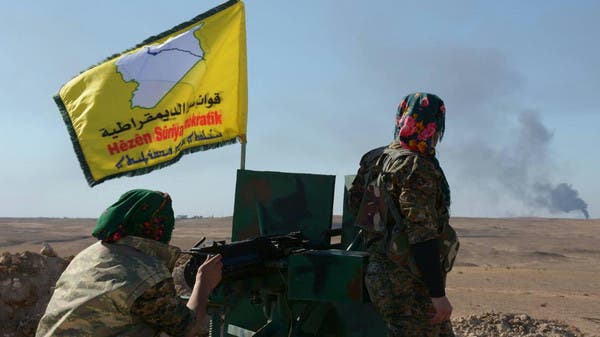
It's common to sigh about the intractability of Middle East conflicts and blame it all on colonial borders, Sykes-Picot and all that. Above is a photo of fighters from the Syrian Democratic Forces, a mainly but not exclusively Kurdish group which is making significant progress in cutting off ISIS supply lines from Turkey. The flag of the group is a map of Syria (with the Euphrates running through it). These groups want a different kind of Syria than the one that is there now, but they haven't -- unlike the glass-tapping gladiators of social media -- given up on the idea of Syria. Or for that matter, Iraq.

Photo: Al Arabiya.

Thursday, June 09, 2016

New York Times gets taken in by South Sudan conflict

The New York Times is usually well-informed on South Sudan, not least because of the long-standing interest of its op-ed columnist Nicholas Kristof. But there is a bizarre op-ed still on their website from a couple of days ago, allegedly co-authored by the President and First Vice President (Salva Kiir and Reik Machar) calling for the abandonment of their joint treaty commitment to a special international war crimes court for South Sudan and its replacement by non-punitive mediation.

The biggest beneficiaries of such a move would be those two gentlemen and the senior security officials who surround them, so it's already ethically dubious.

But that's not the worst thing. The worst thing: Machar says he never authorized the article!

Sudan Tribune --

But Machar’s spokesperson, James Gatdet Dak, dismissed the claims by the officials from the president’s office, saying there was no need to dictate people into accepting the “falsified article.” “Well, what I know is that we work as partners in the transitional government. No one party should author an opinion and insert the name of the other partner as co-author. This is illegal and cheating,” Dak said. “And this is particularly a serious matter when the other partner attempts to violate the peace agreement by trying to scrap the vital clauses on justice and accountability,” he added.

What could possibly go wrong?

Reuters -- Venezuela is putting neighborhood committees linked to the ruling Socialist Party in charge of distributing basic foods amid increasingly violent unrest over chronic shortages that have battered the socialist government's popularity. President Nicolas Maduro's government wants state agencies to buy some 70 percent of food produced in local plants and distribute much of it to the population, which is suffering under a severe recession and triple-digit inflation.

Today in European cynicism

Question: If you're an Eritrean refugee stuck in Sudan, what's your quickest and safest route to Europe?

Answer: Being handed over to the Italian government on the word of gullible intelligence officials that you're a refugee-smuggling mastermind by a Sudanese government eager to show that it's Europe's new best friend in closing down migrant routes.

Downside: That same push by the Sudanese government has also involved deporting Eritrean refugees back to Eritrea. 

Sunday, June 05, 2016

Referendum Clickbait

77 percent of Swiss voters have rejected the advice of Vox and Charles Murray and voted against the Basic Income proposal in a referendum today. As the aforementioned cast indicates, the basic income idea has attracted a varied intellectual coalition around it.

But that raises the question of whether an idea with so many different motivations embedded in it can really be the miracle that it appears. For the advocates in Switzerland, the proposal was about freedom to pursue dreams and impending idleness due to robots, which is a long way from the anti-poverty agenda which would be undermined by getting rid of current anti-poverty programs.

But perhaps the last best words on the proposal are the bemusement from newspaper Neue Zürcher Zeitung --

Bezeichnend ist es dennoch, wenn ausgerechnet eine direktdemokratische Randerscheinung eine derartige Beachtung findet, während wichtigere Entscheidungen der Schweizer Politik gewöhnlich ignoriert werden. Einmal mehr zeigt sich, wie verzerrt die hiesige Abstimmungsdemokratie im Ausland herüberkommt.

[rough translation] Nevertheless it is significant, if just a marginal direct democracy proposal receives such attention, while important decisions of Swiss politics are usually ignored. Once again this shows how distorted the foreign view is of local direct democracy. 

UPDATE: Vox declares that defeat is victory, because it caused a debate on the topic, where "debate" is defined as ... being covered by media outlets like Vox!

Bullet the blue sky

Could it be that the New York Times Sunday Magazine does a special "New York" issue on Manhattan skyscrapers and all the things associated with getting up to and being at  that level, and never mentions 9/11? Well, not quite. At one read through, we find perhaps two mentions of 9/11, and both oblique (e.g. in Winging It, about observing bird life). The 9/11 obliviousness of the stories titled Air Force -- Violent Physics Outside the Skyscraper Window and Man on Spire is particularly unfortunate.

Saturday, June 04, 2016

A different era


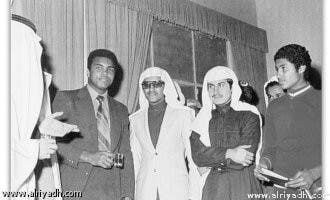
Reading the events of Muhammad Ali's great life is to be reminded or learn of the dynamic cultural environment in which he participated and to some extent he created.

Above is Muhammad Ali on a visit to Riyadh, Saudi Arabia, in 1972. Note how casually the princes around him are dressed, and posed, compared to the rigid and austere formalism that Saudi Arabia shows to the world today. If you think the America of Muhammad Ali's heyday looks like a different country than today, think of that comparison for Saudi Arabia.

Photo via Al Arabiya.

Bush v Gore is still a problem

George Will (in an annual pundit ritual, suddenly filing from Europe during the summer) --

Britain, too, is infected with political silliness ... Corbyn is an apple that did not fall far from the tree: His parents met at a rally advocating peace in the Spanish Civil War. They got their wish. Peace came. When Gen. Francisco Franco came to Madrid. Corbyn is a vegetarian who does not own a car. He does own — perhaps Al Gore knows why; Gore went through an earth tones phase — many beige clothes bought from street vendors.

Al Gore and "earth tones" (he forgot the Naomi Wolf part) is the crowning idiocy of the 2000 presidential campaign coverage -- a campaign that would conclude with a historic disputed election, and then 9 months later, after earth tones and sharks, with hijacked planes being used as weapons. So it's really something for Will to refer to that in a column wondering where the silliness of the current crop of politicians came from. 

Saturday music choice


For the au courant music, you'll have to go elsewhere.  Here, it's new Megadeth that sounds very very good, but we thought it was on the road to a stronger convergence of Arab music and heavy metal than actually occurs.

Bobos in business class

Janan Ganesh (Financial Times) doing a better David Brooks column than David Brooks.

[Previously in this series]

Live in or die

In the Wall Street Journal, Charles Murray advocates his version of a universal basic income plan, which he admits, would involve replacing all existing transfer and welfare programs, but that won't be a problem because --

... the wealth in private hands would be greater than ever before. It is no pipe dream to imagine the restoration, on an unprecedented scale, of a great American tradition of voluntary efforts to meet human needs. It is how Americans, left to themselves, have always responded. Figuratively, and perhaps literally, it is in our DNA. Regardless of what voluntary agencies do (or fail to do), nobody will starve in the streets. Everybody will know that, even if they can’t find any job at all, they can live a decent existence if they are cooperative enough to pool their grants with one or two other people. The social isolates who don’t cooperate will also be getting their own monthly deposit of $833.

Friday, June 03, 2016

And they didn't mean doubtful

Great detail in a Uganda New Vision article about what British colonial planning meant for the African natives --

The first Physical Plan for Kampala was drawn based on what is referred to as Simpson’s 1912 recommendations. Around this period, Simpson, a British Urban Economist was tasked by the colonial government to provide spatial advice on the development of Kampala. This resulted into Simpson’s report that divided Kampala into 3 major zones namely: i) Kololo which was planned for the settlement of the colonial state officials ii) Parts of Kamwokya and Kira Road which were cadastrated for the Indian Business Community and the Northern parts of Kawempe, Kawara, Bwaise and Kanyaanya which were layed out as the “Sceptic Fringe”. Actually, the parts of Kira Road and Kamwokya were to act as Buffer between the high class colonial settlement and the Northern corridor “sceptic fringe” for “security” from disease vectors such as mosquitoes and others.

Thursday, June 02, 2016

No two countries with Uber have gone to war with each other

OK that was an attempt to generate a Tom Friedman style factoid. But anyway, via Saudi Press Agency --

The investment, part of Uber’s Series G fundraising round, is one of Public Investment Fund (PIF’s) single largest international transactions to date and the first since the Kingdom of Saudi Arabia announced Vision 2030, the overarching plan for diversifying the Kingdom’s economy. As part of this investment, PIF will take a seat on Uber’s Board of Directors. “Our experience in Saudi Arabia is a great example of how Uber can benefit riders, drivers and cities. We appreciate the vote of confidence in our business and look forward to partnering with the Kingdom to support their economic and social reforms,” said Travis Kalanick, CEO and co-founder of Uber.

There are several things going on, but one might be the government hedging its bets on whether it can push through liberalized rules allowing women to drive. If it can't, then cheaper and more accessible taxi services is a second option. The tie-in also illustrates, again, that "Wahabbism" should not be confused with an aversion to technology. If anything, it's the opposite. 

Tuesday, May 31, 2016

Our man in Ndjamena

Ronald Reagan greeting Chadian President Hissene Habre in 1987 --

We welcome President Habre to Washington as the leader of a nation that has recently beaten back the violent aggression of an outlaw state (Libya). In winning its stunning victories, Chad has acted to preserve its freedom and handed a forceful message to aggressors. That message is: African nations will defend their sovereignty and foreign aggression will be defeated. In our discussion today, President Habre and I reviewed some of the events that led to this aggression. We also discussed the current situation in Chad. The United States has proudly joined France, Zaire, Egypt, and other friends in the effort to provide President Habre's government the means to fight and win.

That would be the same Hissene Habre convicted of crimes against humanity by an African Union court yesterday. And that alliance that Reagan refers to involved Mobutu and Mubarak. This stuff eventually catches up with you.

On the other hand, the French were apparently nervous back in 1987 that Chad's war against Libya was going so well that the Libyan government under Gadaffi could itself implode causing chaos in the Mediterranean, so they successfully urged Chad to ease off some of the notions that they might have picked up from Reagan's speech. For all we know, that French cynical realism probably bought 30 years of stability in migration from the Sahel.

Monday, May 30, 2016

Mirror mirror on the wall