Saturday, July 28, 2012

Sackcloth and ashes still needed

It's not just in the area of economics where Ireland seems to have reputational issues after the smugness of the Tiger years:

RTE -- The Olympic Council of Ireland is investigating an allegation that an Irish competitor at the London Games previously bet on an opponent to win an event in which they were both competing. A spokesman said the council has informed the athlete, whom it will not name, about an anonymous allegation that two bets were made in favour of an opponent in an unspecified sport prior to the Olympics.

Note: Ireland's sporting administrative elite could use a dose of humility.

They were probably Barclays seats

BBC -- Olympic organisers are investigating why many seats were empty during events at venues including the Aquatic Centre in east London. The BBC's Nick Hope said areas high in the stands at the sold-out event were full but several hundred more expensive seats lower down were not filled. Locog said some accredited seats - for press and media - were empty. 

Thursday, July 19, 2012

Don't touch my bag if you please Mr Customs Man


One of these is banned in the USA, and one isn't. One has a dangerous insect inside, and one has a large plastic cylinder which must be popped open by an older person to find the makings of a little toy. Yes, it's the latter -- a Kinder Surprise egg -- which is treated like the latest creation of al Qaeda in the Arabian Peninsula at US airports, and the former -- Scorpion Candy -- which is widely available at those same airports. [latest Kinder Surprise outrage via Gawker]

Wednesday, July 18, 2012

We're all on need-to-know basis

Actual headline on this Wall Street Journal story: Bank of England's King sets meeting to review LIBOR

What it should be: Mervyn King proposes closed-door meeting in Switzerland in 2 months to improve confidence in LIBOR

Tuesday, July 17, 2012

What Barclays got right

One Barclays employee anyway. In the New York Fed's Friday document dump of their Mm Hmm conversations with the bank about LIBOR, there's an interesting segment from the 10 October 2008 conversation:

Now, with stock markets dropping, you know 10%, 10%, this is people's pensions and things. You know we saw the thing with the Iceland, well. The UK banks, well the UK savers in Iceland, that, that crystallises people's thoughts, and so I think that we're sort of reaching a new stage in the game whereby the CPFF is really good but, not sure it goes far enough, it just gets you back to where you were in August ... So, I think, getting us back to where we were in August isn't really, is, don't get me wrong, it's incredibly useful, but I'm just wondering whether we need to be got back to August plus a bit. The UK guarantee to banks, again, it's a very, very positive thing but, a bit like the CPFF, no-one really knows the details, it's going to take several weeks to get off the ground, everyone is going to examine the guarantee and it's going to take a bit of time for things to start working there. So, again, that's sort of work-in-progress but that is very good news but... you know, the rumour came out that, you know, G8 were going to guarantee all bank deposits, and, you know that's ... What I think, and I know central banks don't like doing this, my view is that, everyone's talking about, "You've got to get into bank lending happening again." I don't think that's necessarily the important thing. I think the important thing is to get banks lending to the consumer ... to Joe Public so I think the way you do that, is you either do things like increase CPFF or you just um, do something similar, like just buying bank term CDs ... But I know central banks don't like doing that. But it's getting to the stage where everytime you and I think you guys tried to be ahead of the curve in the States, er everytime you throw the kitchen sink at the problem, it needs another sink and then another sink. Then there's euphoria for half a day then something else happens and the market plunges, something else has to happen, the the market plunges. It's almost as if, you know, you've got to be totally radical now ... Ahh, because otherwise I had a fit of pessimism a couple of days ago. I think it was the day after RBS got downgraded when there was mayhem in the market and urn I was thinking, you know, this is potential civil strife here because the banking system is just going to break down.

The Barclays employee understood better than his superiors or regulators what a perilous phase the financial sector was at in terms not just of its own crisis, but of its perception with the public. But somehow the backlash didn't happen till 4 years later. But the accumulating disdain could not be put off forever. Much like the more specific LIBOR concerns, it's not clear what the people in the trading rooms knew was travelling upstairs.

Monday, July 16, 2012

Ignore that $11 million pile of cash in the corner

For about a week now there's been a story doing the rounds in the Arabic media that Bahraini customs officials had seized US$11 million in cash being carried by an unidentified American at the country's airport. After various Move Along Folks statements, the government of Bahrain is now out with a complete explanation:

... the Central Bank of Bahrain received a letter on 19 June 2012 from the US Government requesting the entry of the money in order to pay the salaries of US servicemen stationed in Bahrain and other locations in the Gulf ... Typically, such amounts enter Bahrain through an authorized money exchange office. On 12 July 2012, the American Embassy still had not received approval for the entry of the money. Embassy officials contacted the Foreign Ministry to notify them that the money was scheduled to arrive on a military airplane that was to land in an allocated military zone at the Bahrain International Airport.When the carriers of the money arrived they notified customs officials that they were carrying $11 million. The customs officials asked them to provide all of the documents and identifications related to the transfer. The money was held by the customs agents until entry approval was obtained by the Foreign Ministry. Once approval was received and all proper procedures had been followed, the money was released to the carriers.

Well, OK, but ... Bahrain has banks and currency exchanges and its currency is pegged to the dollar so it's not like there's some difficulty in wiring $11 million to the country. So why the need for cash? Lots of it. In the Gulf. A hop, skip, and jump from Iran and pirates and al Qaeda and all sorts of other stuff.

Nope, nothing to see here folks.

Saturday, July 14, 2012

Mitt Romney, passive entrepreneur

Mitt Romney is strangely insistent that he had no active management role in Bain Capital after 1999. Mitt Romney is strangely insistent that no one is getting to see his tax returns prior to 2010. Even though the former date is associated with the row about Bain Capital's job creation numbers, it would be irresponsible not to speculate that there is a close link between the Bain Capital departure date and the reticence about taxes.

Specifically: did Mitt pay self-employment tax on his Bain Capital income after 1999? If he was claiming to be a passive owner, as apparently he was, he wasn't liable for this tax. But any inkling that he still had an operational role in the firm would be tricky. By Mitt's standards, it's not even that much money given the cap on social security taxes. But it would be embarrassing for a party beholden to the cult of the entrepreneur to have its standard bearer someone who dodged a specific tax on that group. Incidentally, there have been issues before with Mitt's exact knowledge of this tax.

Friday, July 13, 2012

It all averages out

From the New York Fed's summer Friday afternoon document dump on the LIBOR scandal, a 24 October 2008 conversation between a Barclays money market trader and the NY Fed markets desk --

I [Barclays trader] think people are afraid to be seen as being having, I mean if they have a high libor the market automatically assumes they're paying too much, but in a perverse kind of way if you put a low libor, it's almost as if the market knows that you're scared to put where you really think it is. I mean, I know that I'm consistently high, but I think I'm consistently correct.

They know who they are

David Brooks taking on Chris Hayes in his New York Times perch: 

The problem is that today’s meritocratic elites cannot admit to themselves that they are elites. Everybody thinks they are countercultural rebels, insurgents against the true establishment, which is always somewhere else.

Across the page, Paul Krugman:

"Is there a V.I.P. entrance? We are V.I.P." That remark, by a donor waiting to get in to one of Mitt Romney’s recent fund-raisers in the Hamptons, pretty much sums up the attitude of America’s wealthy elite.

Saturday, July 07, 2012

Don't drive on your drink

Saudi Customs authorities displaying bottles of what looks like whisky that were hidden inside seemingly new tires. Photo via Saudi Press Agency.

Thursday, July 05, 2012

Why the LIBOR rigging had no impact whatsoever

As a service to humankind, this blog is making available at no charge to everyone an argument that will save hundreds of millions of pounds in legal and consulting fees concerning the LIBOR rigging scandal. This argument required countless hours to develop and involved the use of highly sophisticated computer technology, as seen in the diagram above. Yet through the use of advanced concepts not unrelated to those used to search for the Higgs boson, we have conclusively shown that the alleged rigging of reported LIBOR by the various banks was irrelevant. The logic is as follows.

Everyone says that the scandal comes from the fact that the interest rates in other loan markets were set as LIBOR plus a spread, therefore if LIBOR was understated or overstated, the rates in those other markets must have been affected as well. Picking one hypothetical other market, let i stand for the interest rate in that market, L the quantity of loans, S the supply of loans, and D the demand for loans. Through the miracle of economics, that market has an equilibrium interest rate and quantity of loans denoted i* and L*.

Now here's the thing: you can break up that i* into any sets of numbers that add up to it, but through the aforementioned miracle of economics, there's only one interest that brings about equilibrium in that market. Unless you've got some reason why the process for reporting LIBOR affected S and D, there's no reason why the interest rate should have changed. So if LIBOR was off by 1 percentage point, then somewhere along the chain the equilibrium will involve adding 1 percent to keep the market where it was before, as illustrated by our highly complex equation below the diagram which relies on the deep mathematical property that 1-1=0.

OK, do we actually believe this? We're not sure, but it would advance the argument if this was taken as the baseline position.

Tuesday, July 03, 2012

Would the Republic of Ireland participate in a Tory referendum on UK EU membership?

At first it sounds crazy: if this or a future Tory government in the UK was to put EU membership to a referendum, as they are under increasing pressure to do, the voting base would surely just be the United Kingdom. But in the House of Commons yesterday, David Cameron had to be reminded of his sloppiness even on that point:

Kate Hoey (Vauxhall) (Lab): May I simply ask the Prime Minister to look at his terminology? In his statement, he mentioned Britain 12 times; he did not mention the United Kingdom once. Does he agree that if there is to be a referendum, which I think is inevitable, the people of Northern Ireland should have a very strong say? He must, in the European Council, refer to the United Kingdom, or the UK for short; saying “Britain” excludes Northern Ireland.


The Prime Minister: As ever, the hon. Lady is right about almost everything, and I am rightly chastised.

So anyway, there would have to be a referendum in Northern Ireland as part of the exercise. Now here's where things get tricky. The Good Friday Agreement between the UK and the Republic of Ireland contains the following text:

The two Governments: (i) recognise the legitimacy of whatever choice is freely exercised by a majority of the people of Northern Ireland with regard to its status, whether they prefer to continue to support the Union with Great Britain or a sovereign united Ireland; (ii) recognise that it is for the people of the island of Ireland alone, by agreement between the two parts respectively and without external impediment, to exercise their right of self-determination on the basis of consent, freely and concurrently given, North and South, to bring about a united Ireland, if that is their wish, accepting that this right must be achieved and exercised with and subject to the agreement and consent of a majority of the people of Northern Ireland;

Could not the Irish government argue that a referendum on the question of Northern Ireland leaving the EU with the UK has outcomes so inimical to a united Ireland that under the treaty, the Republic would have to be consulted through an all-Ireland referendum on the question?

Monday, July 02, 2012

He's walking the walk

Everyone has their theories and interpretations about why United States Supreme Court Chief Justice John Roberts voted to uphold the Affordable Care Act, aka ObamneyCare. Here's another.

After he was appointed to the court, he was diagnosed with epilepsy. He'd had a seizure years ago and then had another one during his term. Long medical story short, 2 seizures = epilepsy.

As a result, he may have had time to contemplate what life is like outside a well-regulated public sector health insurance plan for those with pre-existing conditions. An epilepsy diagnosis can pose big problems in the private insurance market. That's a much more plausible theory than the one about his medicine being the problem.

Wednesday, June 27, 2012

Royalty is all Greek to him

One notable thing in the video of the handshake seen around the world -- Martin McGuinness and Queen Elizabeth -- is that McGuinness apparently forgets that Prince Philip (an actual Mountbatten) is there too, and the latter has to offer his hand to him before Martin responds.

Sunday, June 24, 2012

Not going anywhere

After announcing the actual numbers from the Egyptian presidential election with the victory for Mohammed Mursi, the chairman of the electoral commission went into the thanks portion of his address. The first two entities thanked were the judges -- whose most recent act was to dissolve the recently elected parliament -- and the armed forces -- whose most recent act was to strip most of the powers from the presidency.

The counter-revolution is being televised.

Monday, June 18, 2012

Condolence call with a message


Via Saudi Press Agency, the photo shows King Abdullah receiving a mourner of the deceased Crown Prince Nayef. The mourner is Refat al-Assad, brother of Hafez al-Assad and estranged from the rest of the al-Assad clan in Damascus.

Saturday, June 16, 2012

Offer Not Applicable in Republic of Ireland

European Central Bank board member Benoît Cœuré explains the virtues of banks financing themselves through unsecured borrowing:

Moreover, interbank money markets play a significant role in providing incentives for banks to conduct business in a safe and sound manner, thus ensuring market discipline. Specifically, in the unsecured money markets, where loans are uncollateralised, interbank lenders are directly exposed to losses if the interbank loan is not repaid. This gives lenders incentives to collect information about borrowers and to monitor them over the lifetime of the interbank loan, making the loan repayment more probable. Therefore, unsecured money markets play a key peer monitoring role. The information banks acquire about each other may not be readily available to regulatory authorities and central banks. 

Thursday, June 14, 2012

There's a country of interest between those two countries

That's the Deputy Defence Minister of Saudi Arabia (and son of the late Crown Prince Sultan) Prince Khalid meeting the commander of the Konya Airbase in Turkey prior to Saudi Arabia and Turkey participating in the Anatolian Eagle 2 military exercise. Khalid also met the President of Turkey.

It's not just in the Eurozone where things are in motion.

Note to foreign ministries of the world: just like your colleagues in finance ministries, don't make any holiday plans for this weekend.

Tuesday, June 12, 2012

Hamlet without the Prince, the King, the Queen, the Lord Chamberlain, the courtiers etc

From IMF review of Spain's bank resolution and crisis management framework --

While the overall legal and policy framework for providing emergency liquidity assistance (ELA) is broadly sound and reflects good practices, some features could be further specified. These include stricter definition and interpretation of a “solvent bank”, “systemic importance,” and “temporary liquidity support.”

Friday, June 08, 2012

Petty nationalistic complaint

Máire Geoghegan-Quinn, European Commissioner for Research, Innovation and Science, a position obtained as a political appointee of Ireland's disgraced Fianna Fail party, speaking in Belfast yesterday --

In a very big way, and with a sense of determination, the Northern Irish have shown everyone else how to "collaborate to innovate".

There is something not quite right about that sentence. Have the people of Northern Ireland really done this, or have the administrative institutions of Northern Ireland's government shown some interesting results in this area, assuming we accept her premise?  At some point, in other words, living in Northern Ireland has become a distinctive political identity. That may in fact be the case, but it may come as news to some that it's now official EU policy.

Saturday, June 02, 2012

Ireland's commercial property crash leads to crime innovation

Irish Times:

A gang has stolen the contents of a safe from a busy city-centre post office after spending a number of days chipping through the wall of a vacant hotel next door. The gang member who stole the money waited until the post office safe was open before bursting through the last section of wall yesterday morning and taking the money as the stunned postmistress looked on.

Wednesday, May 30, 2012

Wall Street Journal inadvertently makes case for Irish Yes vote

In the context of Ireland's referendum on the fiscal treaty tomorrow, a Wall Street Journal Europe editorial uncorks this rationale for Ireland to want to avoid the fiscal rules in the treaty:

Ireland is Europe's best case study in how a little short-term budget imbalance can go a long way if it's used to fund tax cuts and supply-side reform. The fiscal pact threatens to rob all EU countries of that flexibility. 

Such a broad statement is hard to pin down and it should be noted that some of Ireland's acclaimed corporate taxation system has been around in some form since the 1950s. But nonetheless the statement -- pinning a supply side interpretation on a past fiscal misdeed likely means one thing -- that Charlie McCreevy is still whispering in the Journal's ear as successfully as Fianna Fail did in the glory years of the mid-2000s.

A little history is in order. In late 2000 and early 2001, Charlie McCreevy was Ireland's finance minister. And in that period, he was busy sowing the seeds of Ireland's fiscal disaster: the low interest rates due to the introduction of the euro had already generated a property boom on top of what had been a foreign investment driven economy, and the tax revenue was rolling in. And the plan was to spend it all on (1) tax cuts (2) massive public sector pay increases ("benchmarking"), and (3) any and all items to help buy the next election which was due within 2 years.

Not entirely surprisingly, the still nascent budget monitoring of the European Council of Finance Ministers was unimpressed, and asked for curtailing of measures that were obviously stoking an over-heating economy. Charlie, cheered on by a boosterish and gullible media, and with the intellectual backing of economists who should have known better, told them to F*** Off (using supply-side language), and other than a few cosmetic adjustments to his budget measures, got his way. When people look back at why the European budget rules had so little teeth, they tend to focus on the later brush-offs by France and Germany, but Ireland got their first. Here's an excellent account by Frank Barry of how the 2001 decisions played into the broader political economy of the country to produce the outcomes we see now.

But Charlie, stinging from the sharply revised views of his tenure, still finds sympathy in some quarters, the giveaway being how the WSJ defence uses the same supply-side terminology that Charlie used in 2001. But if the  fiscal pact had been around then, that episode could have turned out differently. 

Monday, May 28, 2012

They've never had it so good

In two recent posts, the estimable Paul Krugman has reproduced a chart from Jonathan Portes which appears to show that the United Kingdom has slashed public investment since 2008. In the chart, public investment falls from 3.5 percent of GDP to 1.5 percent over the space of 3 years. No wonder Krugman says "they're eating the seed corn" and all in the name of that awful Coalition austerity.

But if you reflect a little bit on that information, you might find yourself asking: really -- they managed to halve public investment over three years? It's the kind of thing you might notice, and indeed the kind of things that others might notice given how hard it is to cut any component of public spending.

And then you start digging. Whereupon it turns out that the UK government did not slash public investment by half over three years, at least not in any sense of active cuts to the capital budget. No. What they did was not continue a very temporary last gasp of New Labour splurge on investment that had taken investment far above its historical average, and indeed far above any level achieved in the Blair-Brown era.

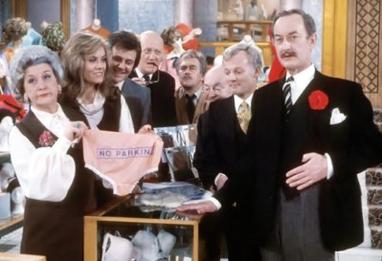
Here's the historical series on public sector net investment as a share of GDP since 1970 (Table 4.1, 7th column). That Brown surge briefly got investment up to a level that hadn't been seen since Are You Being Served was in its original run, and even the current Coalition "cuts" have it back it a level about the same as the Cool Brittania years.

Now stimulus advocates could say that the point still stands: surely the time to boost investment is when interest rates are so low. But you could also look at the preceding 30 years and wonder what was holding back investment then? And the answer might be that revenues were so squeezed by the other commitments of the welfare state that there was no room for public investment. Which might in turn explain why public infrastructure in the UK can seem so shabby today. Which might give you an insight into where those awful austerity people are coming from: the state has to be restructured to make room for the things that the state used to do. It could be that both sides have a point. Which means that one side is not so obviously wrong.

Saturday, May 26, 2012

Amateurs

Iran news agency -- A top secret document disclosed in Egypt in the last few days revealed that the Saudi monarchy, specially the regime's Foreign Minister Saud bin Faisal bin Abdul-Aziz Al Saud, has been attempting to prevent Islamists' victory in Egypt's presidential election.

Saudi News Agency In response to a question from Saudi Press Agency (SPA) on a current document on the internet supposedly from the Minister of Foreign Affairs of the Kingdom of Saudi Arabia to the Embassy in Cairo on the Egyptian elections, Ambassador Osama Naqli, Chairman of Information Department of the Ministry of Foreign Affairs, said this document is clearly rigged and its contents are against the Kingdom's policy of non-interference in the internal affairs of the states. He added that the document is not in line with the formal correspondences of the Saudi Ministry of Foreign Affairs in terms of form, style and content, as well as the rigged signature is not the Foreign Minister's signature or any ministry's official. The Ministry of Foreign Affairs uses Hijri calendar not Gregorian calendar on its documents.

Thursday, May 24, 2012

He can't count to 4 in Spanish either

BBC --Irish musician Bono and former Beatle Sir Paul were among those to pay tribute to the Queen.  There were cheers when Bono praised the Queen for making her trip to the Republic of Ireland last year. He joked: "And the Queen spoke Gaelic, I can't even speak Gaelic." 

1,2, 3 ... 14?

Monday, May 21, 2012

Probably well covered elsewhere

The lead story on BBC World Service news at midnight on Monday was the death of Robin Gibb. Just as well there's not other stuff happening in the world at the moment.

Wednesday, May 16, 2012

Is there austerity in Ireland?

It might seem like a strange question. But the debate over austerity in the Eurozone has reached the It Didn't Work Because It Hasn't Been Tried phase. Here's National Review's Veronique de Rugy taking on Paul Krugman:

My position about austerity in Europe — and why it hasn’t worked– is that in most cases austerity measures have taken the form of some spending cuts mixed with tax increases. With rare exceptions like the Baltic states and Sweden (countries that are growing today), most countries have adopted the “balanced approach” to austerity ... But we can’t deny that austerity in Ireland took the form of both some spending cuts (modest) and tax increases. And that, we know through some 21 peer-reviewed studies, isn’t conducive to debt reductions. My prescription for Ireland is the following: Implement real austerity in the public sector (cut spending) rather than austerity in the private sector (increase taxes). Better yet, implement austerity in the public sector (cut spending) and prosperity in the private sector (cut taxes).

As it happens, the IMF has looked at the spending-tax mix of Ireland (and Portugal) in some detail:


Plans were front-loaded and expenditure-based (in both cases, two-thirds of the adjustment was initially expected from spending cuts). In Ireland, the history of successful expenditure-based fiscal consolidation in the 1980s and 1990s ensured that plans remained expenditure-led throughout, with revenue raising playing a lesser role.

In essence therefore the argument reflects the view from conservative economists that austerity won't work if it contains any tax increases at all, and indeed should if anything be accompanied by tax cuts. Now the trouble is that Ireland's tax increases may have been painful, but they do appear to have increased revenue. Revenue collapsed because of the property bust and the impact of weak economic activity on the tax take, but when tax rates and charges were increased, the leak of revenue was staunched. By the same token, tax cuts would have led to losses in revenue, meaning even wider deficits or even bigger spending cuts. Our Eurozone "partners" would never have gone for the former, and the general public would never have gone for the latter. And in any event, the idea that tax cuts are just what the doctor ordered in a busted economy is a tough sell on its merits.

Nevertheless, there is another angle to the debate. After two rounds of cuts to public sector take-home pay (through a pension levy and pay cuts), Ireland has sworn off further cuts in pay and benefits in the public sector despite a budget deficit excluding bank bailouts of 10 percent of GDP. As a result, austerity has taken the form of fairly blunt chops to the delivery of public sector programs, but with the biggest single element of those programs off limits. And as the country enters 2013 budget season, this process has been going on for 5 years.

The point is that whether Ireland botched austerity by dragging it out and foreswearing the most sweeping instrument of austerity is an open question.

Thursday, May 10, 2012

The Iron Chancellor

Wall Street Journal on the years-long Greek economic crisis: Mr. [George] Papandreou [PM] says that when he asked German Chancellor Angela Merkel for gentler conditions in 2010, she replied that the aid program had to hurt. "We want to make sure nobody else will want this," Ms. Merkel told him.

Also: From the start, Greece's surfeit of debt undermined its chances. Mr. Papandreou's financial adviser, Lazard Ltd., told him the country's bond debts were unsustainable and needed restructuring. ... "I'd like to cut my debt in half too," Ms. Merkel told Mr. Papandreou during a meeting at the Berlin chancellery, according to the Greek premier.

Sunday, May 06, 2012

Strange moments in French election TV coverage

On France 2.

A little while before the estimated results were released, the cameras were waiting outside Francois Hollande's office in Tulle. Meanwhile, Segolene Royal -- former partner of M. Hollande -- was in the outdoor studio panel back in Paris. Eventually the camera crew got in to see a smiling M. Hollande at his desk with an even more smiling Valerie Trierweiler -- current partner of M. Hollande -- on the opposite side. Awkward.

Later the studio did a segue from an interview of Marine Le Pen to get her reaction straight to an interview of Yannick Noah to get his reaction. For a while, Yannick was on the split screen with Marine as they got ready to interview him. Just what the FN voters wanted to see.

Tuesday, May 01, 2012

Mother of Parliaments

Speaker of the UK House of Commons John Bercow during the raucous special Question and Answer with the PM over the handling of the News Corp. bid for BSkyB --

Order. Most questions have focused on the terms of the urgent question. I have sadly to tell the hon. Gentleman that that was a million miles away from it and does not require an answer. It was completely out of order. We will take another Member who, I am sure, will be in order—[Interruption.] Order. I do not require any sedentary chuntering in the background.