One notable thing in the video of the handshake seen around the world -- Martin McGuinness and Queen Elizabeth -- is that McGuinness apparently forgets that Prince Philip (an actual Mountbatten) is there too, and the latter has to offer his hand to him before Martin responds.
Wednesday, June 27, 2012
Sunday, June 24, 2012
Not going anywhere
After announcing the actual numbers from the Egyptian presidential election with the victory for Mohammed Mursi, the chairman of the electoral commission went into the thanks portion of his address. The first two entities thanked were the judges -- whose most recent act was to dissolve the recently elected parliament -- and the armed forces -- whose most recent act was to strip most of the powers from the presidency.
The counter-revolution is being televised.
The counter-revolution is being televised.
Monday, June 18, 2012
Condolence call with a message

Via Saudi Press Agency, the photo shows King Abdullah receiving a mourner of the deceased Crown Prince Nayef. The mourner is Refat al-Assad, brother of Hafez al-Assad and estranged from the rest of the al-Assad clan in Damascus.
Saturday, June 16, 2012
Offer Not Applicable in Republic of Ireland
European Central Bank board member Benoît Cœuré explains the virtues of banks financing themselves through unsecured borrowing:
Moreover, interbank money markets play a significant role in providing incentives for banks to conduct business in a safe and sound manner, thus ensuring market discipline. Specifically, in the unsecured money markets, where loans are uncollateralised, interbank lenders are directly exposed to losses if the interbank loan is not repaid. This gives lenders incentives to collect information about borrowers and to monitor them over the lifetime of the interbank loan, making the loan repayment more probable. Therefore, unsecured money markets play a key peer monitoring role. The information banks acquire about each other may not be readily available to regulatory authorities and central banks.
Moreover, interbank money markets play a significant role in providing incentives for banks to conduct business in a safe and sound manner, thus ensuring market discipline. Specifically, in the unsecured money markets, where loans are uncollateralised, interbank lenders are directly exposed to losses if the interbank loan is not repaid. This gives lenders incentives to collect information about borrowers and to monitor them over the lifetime of the interbank loan, making the loan repayment more probable. Therefore, unsecured money markets play a key peer monitoring role. The information banks acquire about each other may not be readily available to regulatory authorities and central banks.
Thursday, June 14, 2012
There's a country of interest between those two countries

It's not just in the Eurozone where things are in motion.
Note to foreign ministries of the world: just like your colleagues in finance ministries, don't make any holiday plans for this weekend.
Tuesday, June 12, 2012
Hamlet without the Prince, the King, the Queen, the Lord Chamberlain, the courtiers etc
From IMF review of Spain's bank resolution and crisis management framework --
While the overall legal and policy framework for providing emergency liquidity assistance (ELA) is broadly sound and reflects good practices, some features could be further specified. These include stricter definition and interpretation of a “solvent bank”, “systemic importance,” and “temporary liquidity support.”
While the overall legal and policy framework for providing emergency liquidity assistance (ELA) is broadly sound and reflects good practices, some features could be further specified. These include stricter definition and interpretation of a “solvent bank”, “systemic importance,” and “temporary liquidity support.”
Friday, June 08, 2012
Petty nationalistic complaint
Máire Geoghegan-Quinn, European Commissioner for Research, Innovation and Science, a position obtained as a political appointee of Ireland's disgraced Fianna Fail party, speaking in Belfast yesterday --
In a very big way, and with a sense of determination, the Northern Irish have shown everyone else how to "collaborate to innovate".
There is something not quite right about that sentence. Have the people of Northern Ireland really done this, or have the administrative institutions of Northern Ireland's government shown some interesting results in this area, assuming we accept her premise? At some point, in other words, living in Northern Ireland has become a distinctive political identity. That may in fact be the case, but it may come as news to some that it's now official EU policy.
In a very big way, and with a sense of determination, the Northern Irish have shown everyone else how to "collaborate to innovate".
There is something not quite right about that sentence. Have the people of Northern Ireland really done this, or have the administrative institutions of Northern Ireland's government shown some interesting results in this area, assuming we accept her premise? At some point, in other words, living in Northern Ireland has become a distinctive political identity. That may in fact be the case, but it may come as news to some that it's now official EU policy.
Saturday, June 02, 2012
Ireland's commercial property crash leads to crime innovation
Irish Times:
A gang has stolen the contents of a safe from a busy city-centre post office after spending a number of days chipping through the wall of a vacant hotel next door. The gang member who stole the money waited until the post office safe was open before bursting through the last section of wall yesterday morning and taking the money as the stunned postmistress looked on.
A gang has stolen the contents of a safe from a busy city-centre post office after spending a number of days chipping through the wall of a vacant hotel next door. The gang member who stole the money waited until the post office safe was open before bursting through the last section of wall yesterday morning and taking the money as the stunned postmistress looked on.
Wednesday, May 30, 2012
Wall Street Journal inadvertently makes case for Irish Yes vote
In the context of Ireland's referendum on the fiscal treaty tomorrow, a Wall Street Journal Europe editorial uncorks this rationale for Ireland to want to avoid the fiscal rules in the treaty:
Ireland is Europe's best case study in how a little short-term budget imbalance can go a long way if it's used to fund tax cuts and supply-side reform. The fiscal pact threatens to rob all EU countries of that flexibility.
Such a broad statement is hard to pin down and it should be noted that some of Ireland's acclaimed corporate taxation system has been around in some form since the 1950s. But nonetheless the statement -- pinning a supply side interpretation on a past fiscal misdeed likely means one thing -- that Charlie McCreevy is still whispering in the Journal's ear as successfully as Fianna Fail did in the glory years of the mid-2000s.
A little history is in order. In late 2000 and early 2001, Charlie McCreevy was Ireland's finance minister. And in that period, he was busy sowing the seeds of Ireland's fiscal disaster: the low interest rates due to the introduction of the euro had already generated a property boom on top of what had been a foreign investment driven economy, and the tax revenue was rolling in. And the plan was to spend it all on (1) tax cuts (2) massive public sector pay increases ("benchmarking"), and (3) any and all items to help buy the next election which was due within 2 years.
Not entirely surprisingly, the still nascent budget monitoring of the European Council of Finance Ministers was unimpressed, and asked for curtailing of measures that were obviously stoking an over-heating economy. Charlie, cheered on by a boosterish and gullible media, and with the intellectual backing of economists who should have known better, told them to F*** Off (using supply-side language), and other than a few cosmetic adjustments to his budget measures, got his way. When people look back at why the European budget rules had so little teeth, they tend to focus on the later brush-offs by France and Germany, but Ireland got their first. Here's an excellent account by Frank Barry of how the 2001 decisions played into the broader political economy of the country to produce the outcomes we see now.
But Charlie, stinging from the sharply revised views of his tenure, still finds sympathy in some quarters, the giveaway being how the WSJ defence uses the same supply-side terminology that Charlie used in 2001. But if the fiscal pact had been around then, that episode could have turned out differently.
Ireland is Europe's best case study in how a little short-term budget imbalance can go a long way if it's used to fund tax cuts and supply-side reform. The fiscal pact threatens to rob all EU countries of that flexibility.
Such a broad statement is hard to pin down and it should be noted that some of Ireland's acclaimed corporate taxation system has been around in some form since the 1950s. But nonetheless the statement -- pinning a supply side interpretation on a past fiscal misdeed likely means one thing -- that Charlie McCreevy is still whispering in the Journal's ear as successfully as Fianna Fail did in the glory years of the mid-2000s.
A little history is in order. In late 2000 and early 2001, Charlie McCreevy was Ireland's finance minister. And in that period, he was busy sowing the seeds of Ireland's fiscal disaster: the low interest rates due to the introduction of the euro had already generated a property boom on top of what had been a foreign investment driven economy, and the tax revenue was rolling in. And the plan was to spend it all on (1) tax cuts (2) massive public sector pay increases ("benchmarking"), and (3) any and all items to help buy the next election which was due within 2 years.
Not entirely surprisingly, the still nascent budget monitoring of the European Council of Finance Ministers was unimpressed, and asked for curtailing of measures that were obviously stoking an over-heating economy. Charlie, cheered on by a boosterish and gullible media, and with the intellectual backing of economists who should have known better, told them to F*** Off (using supply-side language), and other than a few cosmetic adjustments to his budget measures, got his way. When people look back at why the European budget rules had so little teeth, they tend to focus on the later brush-offs by France and Germany, but Ireland got their first. Here's an excellent account by Frank Barry of how the 2001 decisions played into the broader political economy of the country to produce the outcomes we see now.
But Charlie, stinging from the sharply revised views of his tenure, still finds sympathy in some quarters, the giveaway being how the WSJ defence uses the same supply-side terminology that Charlie used in 2001. But if the fiscal pact had been around then, that episode could have turned out differently.
Monday, May 28, 2012
They've never had it so good
But if you reflect a little bit on that information, you might find yourself asking: really -- they managed to halve public investment over three years? It's the kind of thing you might notice, and indeed the kind of things that others might notice given how hard it is to cut any component of public spending.
And then you start digging. Whereupon it turns out that the UK government did not slash public investment by half over three years, at least not in any sense of active cuts to the capital budget. No. What they did was not continue a very temporary last gasp of New Labour splurge on investment that had taken investment far above its historical average, and indeed far above any level achieved in the Blair-Brown era.
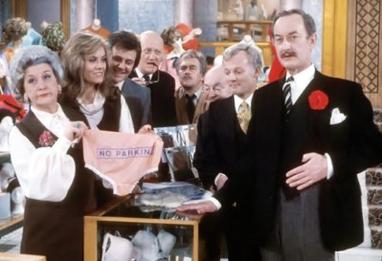
Here's the historical series on public sector net investment as a share of GDP since 1970 (Table 4.1, 7th column). That Brown surge briefly got investment up to a level that hadn't been seen since Are You Being Served was in its original run, and even the current Coalition "cuts" have it back it a level about the same as the Cool Brittania years.
Now stimulus advocates could say that the point still stands: surely the time to boost investment is when interest rates are so low. But you could also look at the preceding 30 years and wonder what was holding back investment then? And the answer might be that revenues were so squeezed by the other commitments of the welfare state that there was no room for public investment. Which might in turn explain why public infrastructure in the UK can seem so shabby today. Which might give you an insight into where those awful austerity people are coming from: the state has to be restructured to make room for the things that the state used to do. It could be that both sides have a point. Which means that one side is not so obviously wrong.
Saturday, May 26, 2012
Amateurs
Iran news agency -- A top secret document disclosed in Egypt in the last few days revealed that the Saudi monarchy, specially the regime's Foreign Minister Saud bin Faisal bin Abdul-Aziz Al Saud, has been attempting to prevent Islamists' victory in Egypt's presidential election.
Saudi News Agency In response to a question from Saudi Press Agency (SPA) on a current document on the internet supposedly from the Minister of Foreign Affairs of the Kingdom of Saudi Arabia to the Embassy in Cairo on the Egyptian elections, Ambassador Osama Naqli, Chairman of Information Department of the Ministry of Foreign Affairs, said this document is clearly rigged and its contents are against the Kingdom's policy of non-interference in the internal affairs of the states. He added that the document is not in line with the formal correspondences of the Saudi Ministry of Foreign Affairs in terms of form, style and content, as well as the rigged signature is not the Foreign Minister's signature or any ministry's official. The Ministry of Foreign Affairs uses Hijri calendar not Gregorian calendar on its documents.
Saudi News Agency In response to a question from Saudi Press Agency (SPA) on a current document on the internet supposedly from the Minister of Foreign Affairs of the Kingdom of Saudi Arabia to the Embassy in Cairo on the Egyptian elections, Ambassador Osama Naqli, Chairman of Information Department of the Ministry of Foreign Affairs, said this document is clearly rigged and its contents are against the Kingdom's policy of non-interference in the internal affairs of the states. He added that the document is not in line with the formal correspondences of the Saudi Ministry of Foreign Affairs in terms of form, style and content, as well as the rigged signature is not the Foreign Minister's signature or any ministry's official. The Ministry of Foreign Affairs uses Hijri calendar not Gregorian calendar on its documents.
Thursday, May 24, 2012
He can't count to 4 in Spanish either
BBC --Irish musician Bono and former Beatle Sir Paul were among those to pay tribute to the Queen. There were cheers when Bono praised the Queen for making her trip to the Republic of Ireland last year.
He joked: "And the Queen spoke Gaelic, I can't even speak Gaelic."
1,2, 3 ... 14?
1,2, 3 ... 14?
Monday, May 21, 2012
Probably well covered elsewhere
The lead story on BBC World Service news at midnight on Monday was the death of Robin Gibb. Just as well there's not other stuff happening in the world at the moment.
Wednesday, May 16, 2012
Is there austerity in Ireland?
It might seem like a strange question. But the debate over austerity in the Eurozone has reached the It Didn't Work Because It Hasn't Been Tried phase. Here's National Review's Veronique de Rugy taking on Paul Krugman:
My position about austerity in Europe — and why it hasn’t worked– is that in most cases austerity measures have taken the form of some spending cuts mixed with tax increases. With rare exceptions like the Baltic states and Sweden (countries that are growing today), most countries have adopted the “balanced approach” to austerity ... But we can’t deny that austerity in Ireland took the form of both some spending cuts (modest) and tax increases. And that, we know through some 21 peer-reviewed studies, isn’t conducive to debt reductions. My prescription for Ireland is the following: Implement real austerity in the public sector (cut spending) rather than austerity in the private sector (increase taxes). Better yet, implement austerity in the public sector (cut spending) and prosperity in the private sector (cut taxes).
As it happens, the IMF has looked at the spending-tax mix of Ireland (and Portugal) in some detail:
Plans were front-loaded and expenditure-based (in both cases, two-thirds of the adjustment was initially expected from spending cuts). In Ireland, the history of successful expenditure-based fiscal consolidation in the 1980s and 1990s ensured that plans remained expenditure-led throughout, with revenue raising playing a lesser role.
In essence therefore the argument reflects the view from conservative economists that austerity won't work if it contains any tax increases at all, and indeed should if anything be accompanied by tax cuts. Now the trouble is that Ireland's tax increases may have been painful, but they do appear to have increased revenue. Revenue collapsed because of the property bust and the impact of weak economic activity on the tax take, but when tax rates and charges were increased, the leak of revenue was staunched. By the same token, tax cuts would have led to losses in revenue, meaning even wider deficits or even bigger spending cuts. Our Eurozone "partners" would never have gone for the former, and the general public would never have gone for the latter. And in any event, the idea that tax cuts are just what the doctor ordered in a busted economy is a tough sell on its merits.
Nevertheless, there is another angle to the debate. After two rounds of cuts to public sector take-home pay (through a pension levy and pay cuts), Ireland has sworn off further cuts in pay and benefits in the public sector despite a budget deficit excluding bank bailouts of 10 percent of GDP. As a result, austerity has taken the form of fairly blunt chops to the delivery of public sector programs, but with the biggest single element of those programs off limits. And as the country enters 2013 budget season, this process has been going on for 5 years.
The point is that whether Ireland botched austerity by dragging it out and foreswearing the most sweeping instrument of austerity is an open question.
My position about austerity in Europe — and why it hasn’t worked– is that in most cases austerity measures have taken the form of some spending cuts mixed with tax increases. With rare exceptions like the Baltic states and Sweden (countries that are growing today), most countries have adopted the “balanced approach” to austerity ... But we can’t deny that austerity in Ireland took the form of both some spending cuts (modest) and tax increases. And that, we know through some 21 peer-reviewed studies, isn’t conducive to debt reductions. My prescription for Ireland is the following: Implement real austerity in the public sector (cut spending) rather than austerity in the private sector (increase taxes). Better yet, implement austerity in the public sector (cut spending) and prosperity in the private sector (cut taxes).
As it happens, the IMF has looked at the spending-tax mix of Ireland (and Portugal) in some detail:
Plans were front-loaded and expenditure-based (in both cases, two-thirds of the adjustment was initially expected from spending cuts). In Ireland, the history of successful expenditure-based fiscal consolidation in the 1980s and 1990s ensured that plans remained expenditure-led throughout, with revenue raising playing a lesser role.
In essence therefore the argument reflects the view from conservative economists that austerity won't work if it contains any tax increases at all, and indeed should if anything be accompanied by tax cuts. Now the trouble is that Ireland's tax increases may have been painful, but they do appear to have increased revenue. Revenue collapsed because of the property bust and the impact of weak economic activity on the tax take, but when tax rates and charges were increased, the leak of revenue was staunched. By the same token, tax cuts would have led to losses in revenue, meaning even wider deficits or even bigger spending cuts. Our Eurozone "partners" would never have gone for the former, and the general public would never have gone for the latter. And in any event, the idea that tax cuts are just what the doctor ordered in a busted economy is a tough sell on its merits.
Nevertheless, there is another angle to the debate. After two rounds of cuts to public sector take-home pay (through a pension levy and pay cuts), Ireland has sworn off further cuts in pay and benefits in the public sector despite a budget deficit excluding bank bailouts of 10 percent of GDP. As a result, austerity has taken the form of fairly blunt chops to the delivery of public sector programs, but with the biggest single element of those programs off limits. And as the country enters 2013 budget season, this process has been going on for 5 years.
The point is that whether Ireland botched austerity by dragging it out and foreswearing the most sweeping instrument of austerity is an open question.
Thursday, May 10, 2012
The Iron Chancellor
Wall Street Journal on the years-long Greek economic crisis: Mr. [George] Papandreou [PM] says that when he asked German Chancellor Angela Merkel for gentler conditions in 2010, she replied that the aid program had to hurt. "We want to make sure nobody else will want this," Ms. Merkel told him.
Also: From the start, Greece's surfeit of debt undermined its chances. Mr. Papandreou's financial adviser, Lazard Ltd., told him the country's bond debts were unsustainable and needed restructuring. ... "I'd like to cut my debt in half too," Ms. Merkel told Mr. Papandreou during a meeting at the Berlin chancellery, according to the Greek premier.
Also: From the start, Greece's surfeit of debt undermined its chances. Mr. Papandreou's financial adviser, Lazard Ltd., told him the country's bond debts were unsustainable and needed restructuring. ... "I'd like to cut my debt in half too," Ms. Merkel told Mr. Papandreou during a meeting at the Berlin chancellery, according to the Greek premier.
Sunday, May 06, 2012
Strange moments in French election TV coverage
On France 2.
A little while before the estimated results were released, the cameras were waiting outside Francois Hollande's office in Tulle. Meanwhile, Segolene Royal -- former partner of M. Hollande -- was in the outdoor studio panel back in Paris. Eventually the camera crew got in to see a smiling M. Hollande at his desk with an even more smiling Valerie Trierweiler -- current partner of M. Hollande -- on the opposite side. Awkward.
Later the studio did a segue from an interview of Marine Le Pen to get her reaction straight to an interview of Yannick Noah to get his reaction. For a while, Yannick was on the split screen with Marine as they got ready to interview him. Just what the FN voters wanted to see.
A little while before the estimated results were released, the cameras were waiting outside Francois Hollande's office in Tulle. Meanwhile, Segolene Royal -- former partner of M. Hollande -- was in the outdoor studio panel back in Paris. Eventually the camera crew got in to see a smiling M. Hollande at his desk with an even more smiling Valerie Trierweiler -- current partner of M. Hollande -- on the opposite side. Awkward.
Later the studio did a segue from an interview of Marine Le Pen to get her reaction straight to an interview of Yannick Noah to get his reaction. For a while, Yannick was on the split screen with Marine as they got ready to interview him. Just what the FN voters wanted to see.
Tuesday, May 01, 2012
Mother of Parliaments
Speaker of the UK House of Commons John Bercow during the raucous special Question and Answer with the PM over the handling of the News Corp. bid for BSkyB --
Order. Most questions have focused on the terms of the urgent question. I have sadly to tell the hon. Gentleman that that was a million miles away from it and does not require an answer. It was completely out of order. We will take another Member who, I am sure, will be in order—[Interruption.] Order. I do not require any sedentary chuntering in the background.
Order. Most questions have focused on the terms of the urgent question. I have sadly to tell the hon. Gentleman that that was a million miles away from it and does not require an answer. It was completely out of order. We will take another Member who, I am sure, will be in order—[Interruption.] Order. I do not require any sedentary chuntering in the background.
Sunday, April 29, 2012
He doesn't do irony
New York Times Tom Friedman --
As I walk around the streets of Beirut, that verse from “The Sounds of Silence” keeps rattling around in my head: “The words of the prophets are written on the subway walls, and tenement halls ...”
Thus revealing his pre-1980s musical awareness. Fans of the latter vintage would know better the wordplay on those lyrics in Rush's Spirit of Radio. Its cynicism is more appropriate to the rest of Friedman's column.
Thursday, April 26, 2012
No, Pope Benedict did not endorse the House Republican budget
Leading Republican "thinker" Congresssman Paul Ryan at Georgetown University the other day:
The overarching threat to our whole society today is the exploding federal debt. The Holy Father, Pope Benedict, has charged that governments, communities, and individuals running up high debt levels are “living at the expense of future generations” and “living in untruth.”
The words in quotation marks have started popping up in the Googlesphere recently, which suggests that someone is e-mailing around the quotes. It's important to look at the source, which is a book-length interview of Benedict by the German journalist Peter Seewald:
Q: If it is a question of a good example, the State has not proved to be very exemplary either. Governments today pile up debts to heights never seen before. A single country like Germany spent no less than 43.9 billion Euros just on interest payments to banks; in other words, for the fact that despite all our wealth we have lived beyond our means. Those interest payments alone would be enough to provide food for a year for all the children in developing countries. Worldwide, since the onset of the financial crisis, government debt has increased by 45 percent—by now totaling more than 50 trillion dollars—inconceivable figures, and a completely unprecedented situation. In 2010 the member states of the European Union alone are taking out more than 800 billion Euros of new loans. The new debt in the United States government budget is pegged at 1.56 trillion dollars, the high point of all time. The Harvard Professor Kenneth Rogoff says, therefore, that there is no normality any more, but only an illusion of normality.Certainly generations to come are being burdened with colossal debts. Isn't that also an insanely big moral problem?
A: Naturally, because we are living at the expense of future generations. In this respect it is plain that we are living in untruth. We live on the basis of appearances,and the huge debts are meanwhile treated as something that we are simply entitled to. Here, too, everyone understands in theory that it would require careful deliberation to recognize again what is really possible,what one can do, and what one may do. And yet people do not take it to heart. Above and beyond the individual financial plans, a global examination of conscience is indispensable. The Church has tried to make a contribution in this regard with the encyclical Caritas in veritate. It does not give answers that would solve everything. But it is a step toward putting things into another perspective and looking at them not only from the point of view of feasibility and success, but from the point of view that sees love of neighbor as something normative and is oriented to God's will and not just to our desires. In this respect impetus would have to be provided in this way so that a change of consciousness can really come about.
A few things to note. The question is as long as the answer. By the end of the question, economics professor Ken Rogoff sounds like the dudes who wrote The Matrix. Benedict's answer -- as Ryan's carefully worded excerpt acknowledges -- says absolutely nothing about budget deficits per se, and especially not anything about the right way to address them. It's as much, if not more so, a critique of private debts as public ones to the extent that it addresses Seewald's 10-clause question at all.
Anyway, Ryan should know better (but maybe he doesn't) to go before the Jesuits in Georgetown and start picking and choosing his Pope quotes. In other segments of the interview book, Benedict talks about off-limit topics for Ryan, like global warming and social safety nets. Indeed, bear in mind that Paul Ryan is a Republican from Wiscsonsin and consider this part of the encyclical that Benedict referred to his answer:
Through the combination of social and economic change, trade union organizations experience greater difficulty in carrying out their task of representing the interests of workers, partly because Governments, for reasons of economic utility, often limit the freedom or the negotiating capacity of labour unions. Hence traditional networks of solidarity have more and more obstacles to overcome. The repeated calls issued within the Church's social doctrine, beginning with Rerum Novarum, for the promotion of workers' associations that can defend their rights must therefore be honoured today even more than in the past, as a prompt and far-sighted response to the urgent need for new forms of cooperation at the international level, as well as the local level.
Paul Ryan supports Scott Walker, the union-busting governor of Wisconsin. Why do they hate the Pope?
UPDATE: Washington Post's Dana Milbank with more about the Georgetown even.

Tuesday, April 24, 2012

Friday, April 20, 2012
Would you trust these people with a nuclear weapon
Who said the following today?
We need to end Barack Obama's presidency before Barack Obama's presidency ends our way of life.
(a) Ted Nugent
(b) Rush Limbaugh
(c) Mahmoud Ahmadinejad
(d) Reince Preibus
Although your reaction to (d) may be, Who?, he is in fact the Chairman of the Republican National Committee. And yes, he said it, at an event podium (15 minute mark) in Scottsdale Ariz. including Mitt Romney and John McCain, the two most recent Republican candidates for US president. Do they think about what the words coming out of their mouths actually mean?
We need to end Barack Obama's presidency before Barack Obama's presidency ends our way of life.
(a) Ted Nugent
(b) Rush Limbaugh
(c) Mahmoud Ahmadinejad
(d) Reince Preibus
Although your reaction to (d) may be, Who?, he is in fact the Chairman of the Republican National Committee. And yes, he said it, at an event podium (15 minute mark) in Scottsdale Ariz. including Mitt Romney and John McCain, the two most recent Republican candidates for US president. Do they think about what the words coming out of their mouths actually mean?
Tuesday, April 17, 2012
Cool customer
The Saudi Ambassador to Yemen finds time to argue about his accent with an associate of Al Qaeda kidnappers phoning with a ransom demand:
Al-Shudokhi: The group (Al Qaeda in the Arabian Peninsula) has some demands which you can convey as they are. I am entrusted with this mission as a sign that everything is alright. I have been directed to talk plainly and tell you who I am and what is my name, since the state (Saudi Arabia) knows me.
Ambassador: Since the state knows you, why do not you tell me your name?
Al-Shudokhi: My name is Misha'al Mohammed Al-Shudokhi.
Ambassador: Are you from Qassim?
Al-Shudokhi: Yes, of course.
Ambassador: It seems that you have forgotten the accent of Qassim people.
Al-Shudokhi: No, I did not. We were brought up in Yemen, and this has affected my accent.
Ambassador: Qassim people would never lose their accent.
Al-Shudokhi: I am from Buraidah, take it as you like.
Al-Shudokhi: The group (Al Qaeda in the Arabian Peninsula) has some demands which you can convey as they are. I am entrusted with this mission as a sign that everything is alright. I have been directed to talk plainly and tell you who I am and what is my name, since the state (Saudi Arabia) knows me.
Ambassador: Since the state knows you, why do not you tell me your name?
Al-Shudokhi: My name is Misha'al Mohammed Al-Shudokhi.
Ambassador: Are you from Qassim?
Al-Shudokhi: Yes, of course.
Ambassador: It seems that you have forgotten the accent of Qassim people.
Al-Shudokhi: No, I did not. We were brought up in Yemen, and this has affected my accent.
Ambassador: Qassim people would never lose their accent.
Al-Shudokhi: I am from Buraidah, take it as you like.
Saturday, April 14, 2012
Newt Gingrich says centuries of Irish rebels were wimps
Here's the video. It's his speech to the National Rifle Association convention. After inflicting his Presidential campaign stump speech on an audience that admittedly deserved such a fate, he decided to address the actual topic of relevance to the NRA and said, inter alia:
When the British troops arrived at Lexington and Concord in April 1775 expecting to force the peasantry into surrender, something they had done quite well in Ireland, Scotland, Wales, and England, they suddenly found they weren't up against peasants, they were up against Americans.
Later in the same speech, Newt promised that a President Gingrich will seek a global treaty establishing a human right to keep and bear arms.
When the British troops arrived at Lexington and Concord in April 1775 expecting to force the peasantry into surrender, something they had done quite well in Ireland, Scotland, Wales, and England, they suddenly found they weren't up against peasants, they were up against Americans.
Later in the same speech, Newt promised that a President Gingrich will seek a global treaty establishing a human right to keep and bear arms.
Friday, April 13, 2012
The airport drive is the whole country
What is about European Central Bankers and Tom Friedman-style presentations of the airport road as representative of not just the nation, but deeper truths? Here's the ECB's Jorg Asmussen in Dublin yesterday:
Coming to Ireland yesterday was a very short journey for me, leaving my office in Frankfurt at 3 pm and arriving in downtown Dublin at 6 pm. On the way from the airport my Counsellor, who is accompanying me today, remarked that Ireland, however, has apparently come a long way compared to the time when she visited Ireland for the first time as a backpacking student almost 20 years ago in the early 1990s. While she recalled that her first impression of travelling from the airport downtown was rather sad, with run down warehouses and poor residential buildings, the picture has completely changed: modern office buildings and residential areas line the streets on the short trip from the airport to downtown nowadays. This is anecdotal evidence, of course, but I think it depicts in a nutshell Ireland’s truly remarkable economic development over the last 20 years.
Coming to Ireland yesterday was a very short journey for me, leaving my office in Frankfurt at 3 pm and arriving in downtown Dublin at 6 pm. On the way from the airport my Counsellor, who is accompanying me today, remarked that Ireland, however, has apparently come a long way compared to the time when she visited Ireland for the first time as a backpacking student almost 20 years ago in the early 1990s. While she recalled that her first impression of travelling from the airport downtown was rather sad, with run down warehouses and poor residential buildings, the picture has completely changed: modern office buildings and residential areas line the streets on the short trip from the airport to downtown nowadays. This is anecdotal evidence, of course, but I think it depicts in a nutshell Ireland’s truly remarkable economic development over the last 20 years.
Thursday, March 29, 2012
Just in case you thought a BRICS world was going to be better
Soft-pedaling on Bashar al-Assad is just one aspect of the Brazil-Russia-India-China-South Africa concurrence. Here's a little revelation from a convoluted lawsuit concerning South Africa's MTN phone company and the lengths to which they went to get a mobile phone concession in Iran --
MTN prevailed upon the South African government to abstain from three votes on Iran’s nuclear energy program at the United Nations’ International Atomic Energy Agency in Vienna in 2005 and 2006, according to the complaint. The Iranian communications ministry allegedly told MTN it was withholding its license until it saw how South Africa voted at an upcoming IAEA meeting.
MTN prevailed upon the South African government to abstain from three votes on Iran’s nuclear energy program at the United Nations’ International Atomic Energy Agency in Vienna in 2005 and 2006, according to the complaint. The Iranian communications ministry allegedly told MTN it was withholding its license until it saw how South Africa voted at an upcoming IAEA meeting.
Tuesday, March 27, 2012
Is this all they've got?
The Wall Street Journal editorial page -- demonstrating again the gulf with the FT page -- gives conservative novelist Mark Helprin space to run through a version of Mitt Romney's critique of Barack Obama: that Obama wants to make the USA like Europe. They must think it has some mileage, but Helprin is forced into some bizarre assertions and attempts at "humour" to make it work. It's all so painful that we can only handle two excerpts:
As a museum of culture, it has few competitors. Europeans make better movies; their cuisine is better (except in Eastern Europe, Central Europe, Scandinavia, England, Ireland, the Low Countries, Germany and Switzerland); and they do a better job of suppressing modern architecture, for which they are to be commended.
Note: through this phrasing, he appears to be claiming that Scottish and Welsh cuisine is excellent, while Belgian cuisine is terrible. Also, regarding the architecture remark, has he left the historical core of any of the European cities that he's visited?
No European air force except Russia's is superior to Saudi Arabia's.
So if it comes to a mano-a-mano duel in the skies between France and Saudi Arabia, he's taking Saudi Arabia? Good luck with that.
As a museum of culture, it has few competitors. Europeans make better movies; their cuisine is better (except in Eastern Europe, Central Europe, Scandinavia, England, Ireland, the Low Countries, Germany and Switzerland); and they do a better job of suppressing modern architecture, for which they are to be commended.
Note: through this phrasing, he appears to be claiming that Scottish and Welsh cuisine is excellent, while Belgian cuisine is terrible. Also, regarding the architecture remark, has he left the historical core of any of the European cities that he's visited?
No European air force except Russia's is superior to Saudi Arabia's.
So if it comes to a mano-a-mano duel in the skies between France and Saudi Arabia, he's taking Saudi Arabia? Good luck with that.
Saturday, March 24, 2012
Other priorities
Dick Cheney has gotten a heart transplant.
10 days ago it was reported that Cheney had cancelled a speaking engagement in Toronto, citing the "risk of violent protest." Ticket holders were offered a refund or Mark Steyn.
Anyway, the fact that he got a heart transplant means that he was on the waiting list to get one. Being on the waiting list means that you could get a phone call at any time, and within a small number of hours, you have to be where the organ is. And yet he was proposing to travel to Canada in April.
Even in his seriously ill state, did he or those around him (i.e. his daughter Liz) decide to spin a medical cancellation of his Canada trip into some victimology? Do the lies ever stop?
10 days ago it was reported that Cheney had cancelled a speaking engagement in Toronto, citing the "risk of violent protest." Ticket holders were offered a refund or Mark Steyn.
Anyway, the fact that he got a heart transplant means that he was on the waiting list to get one. Being on the waiting list means that you could get a phone call at any time, and within a small number of hours, you have to be where the organ is. And yet he was proposing to travel to Canada in April.
Even in his seriously ill state, did he or those around him (i.e. his daughter Liz) decide to spin a medical cancellation of his Canada trip into some victimology? Do the lies ever stop?
Tuesday, March 20, 2012
We strongly condemn this event or product
EU statement --
Joint statement by President Barroso and the President of the European Council Herman van Rompuy following the tragedy in Toulouse
"We strongly condemn recent violent attacks against a number of religious communities in Europe and outside Europe. Any form of persecution and violent acts against religious communities have no place in Europe and, indeed, in the World!
Europe has fought a long and painful battle to achieve freedom of thought, freedom of religion and belief and the respect for the individual. These human and fundamental rights form part of the Charter on fundamental rights which is at the heart of our European values; the EU will continue to foster these rights."
You'd think that a bureaucracy so focused on elite recruitment would get better quality press-releases. Perhaps reacting to the mess that Catherine Ashton found herself in (when, in her defence, she departed from prepared remarks to explicitly condemn the Toulouse murders), this new statement from the EU heads is a condemnation of ... everything. And therefore of nothing. It only mentions Toulouse in the title (which did not appear in the original version), and the statement is self-titled as "following" Toulouse as opposed to reacting to it.
Since the end result is just a generic denunciation of bad staff, why bother issuing any statement at all?
Joint statement by President Barroso and the President of the European Council Herman van Rompuy following the tragedy in Toulouse
"We strongly condemn recent violent attacks against a number of religious communities in Europe and outside Europe. Any form of persecution and violent acts against religious communities have no place in Europe and, indeed, in the World!
Europe has fought a long and painful battle to achieve freedom of thought, freedom of religion and belief and the respect for the individual. These human and fundamental rights form part of the Charter on fundamental rights which is at the heart of our European values; the EU will continue to foster these rights."
You'd think that a bureaucracy so focused on elite recruitment would get better quality press-releases. Perhaps reacting to the mess that Catherine Ashton found herself in (when, in her defence, she departed from prepared remarks to explicitly condemn the Toulouse murders), this new statement from the EU heads is a condemnation of ... everything. And therefore of nothing. It only mentions Toulouse in the title (which did not appear in the original version), and the statement is self-titled as "following" Toulouse as opposed to reacting to it.
Since the end result is just a generic denunciation of bad staff, why bother issuing any statement at all?
Sunday, March 18, 2012
Even the bankrupt rich have more money
The New York Times Sunday Magazine has a nice article about the Centria apartment building in midtown Manhattan as a parable for the Irish property boom. You go in thinking that it's going to be about the parade of suckers who paid too much for prestige real estate (the "we flew the Tricolour over the Savoy!" mentality), but in fact it's about the resilience of the New York City property market. Although the Irish who bought into this building probably spent more than they should have, the apartments have held their value, are generating income, and there's a ready market in the latest wave of foreign buyers for those who need to sell. And those who need to sell are in trouble due to their balance sheets back home in Ireland, not because of their Manhattan apartments.
But of course the typical Irish boom-era overseas buyer (those apocryphal taxi drivers with 6 or 7 properties mentioned in the article) weren't buying in midtown. They were buying off-plan in Spain, Bulgaria or Dubai and now are saddled with places in busted property markets and, for the latter two, unfamiliar and even capricious legal systems. The people who could afford to buy in New York and London may have lost their shirts. They're still a lot better off than the average buyer.
But of course the typical Irish boom-era overseas buyer (those apocryphal taxi drivers with 6 or 7 properties mentioned in the article) weren't buying in midtown. They were buying off-plan in Spain, Bulgaria or Dubai and now are saddled with places in busted property markets and, for the latter two, unfamiliar and even capricious legal systems. The people who could afford to buy in New York and London may have lost their shirts. They're still a lot better off than the average buyer.
Subscribe to:
Posts (Atom)